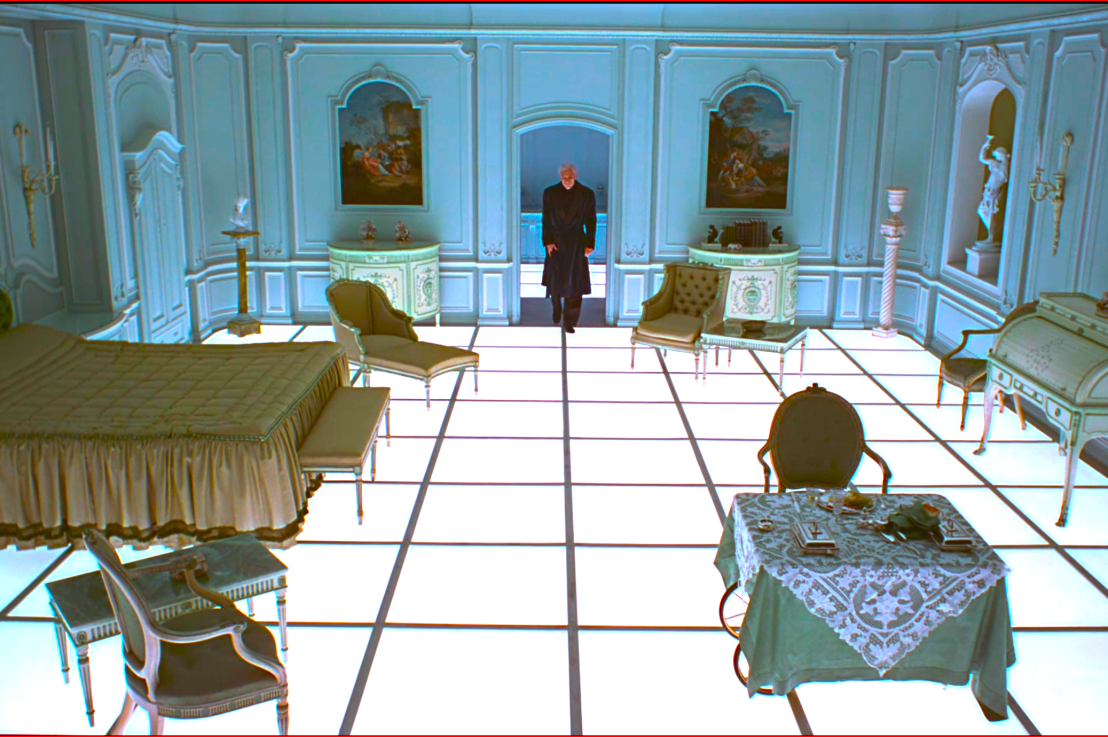
One of the things that sucks about getting old is the realization that nothing much surprises or fascinates me anymore. Both genius and stupidity have been parsed down so much that, when it shows up as something claiming to be new, it quickly becomes a yawn. Been there, done that, ho hum.
However, some art is so good and so deep, that there seems to be an endless journey of discovery within, and for me, nothing epitomizes that depth like Kubrick’s Sci-Fi masterpiece.

When I first saw it, and I remember that first time, I was spellbound. I think part of that was due to the fact that there is minimal dialog in the film — for a kid, all we had to do was sit back and watch the various visuals sliding in front of us. The actual dialog, and plot for that matter, was meaningless for a ten-year-old child anyhow. What DID matter was the space stuff, and it was so beautiful that it overwhelmed.
Of course, now that I am an old fart, the plot is simple, though the human message within remains something to ponder. Isn’t that what art is for in the first place? Yes, yes, yes.
And, so, with that in mind, I wanted to delve into something that I think other Kubrick aficionados have missed.
Kubrick and Clarke
The film and book were a collaboration between Kubrick and Clarke. Clarke was already a noted Sci-Fi writer with serious street cred. Kubrick was looking to break into the genre. Though Kubrick was born in the USA, he had basically shifted his life to the UK in the 1960s. Clarke was born in the UK, and had relocated to what was then colonial Sri Lanka.
Basically, the film and book are NOT a Hollywood production. Instead, the effort happened in spite of Hollywood. Is this important?
John Dee’s Monas
Once we realize that the film and book are threaded with nods to John Dee’s Monas Hieroglyphica, the English setting makes a bit more sense. Well, at least the astrological, or should I say astrognomical, parts of the Monas. 2ASO is about going to planets, after all, and discovering who we are and why we are here. The Monas was Dee’s attempt to explain the mystical cosmos.
The Monolith
The main character of the film is the Monolith.

Through the Monolith, we can see the work of the Creator, but not the Creator itself. The Monolith is the tool of the Creator, and therefore the window. It is pure black, and pure darkness. The album in “This Is Spinal Tap” makes a bit of fun of the concept:
“It’s like, how much more black could this be? And the answer is none. None more black.”
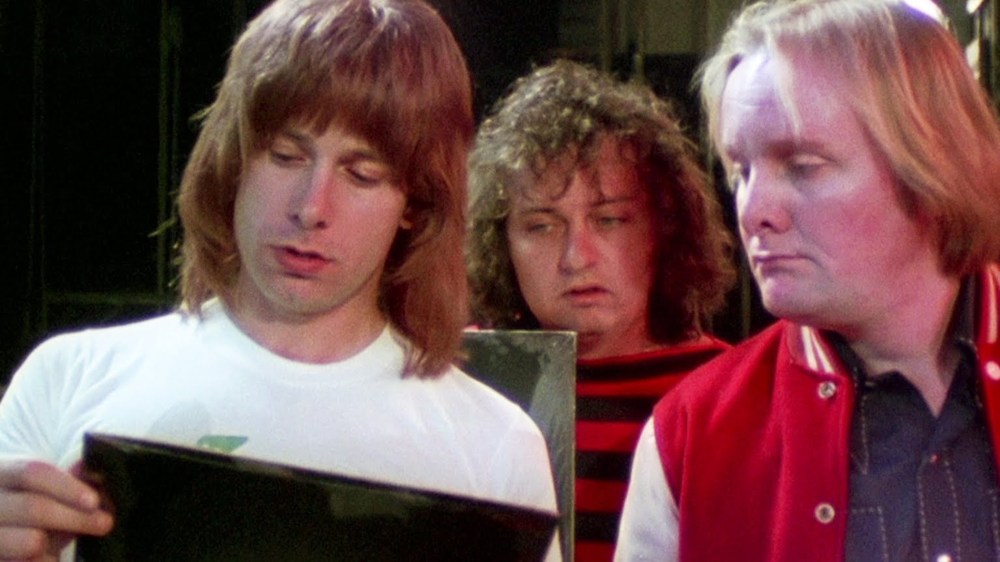
The Monolith is what gave prehistoric man its quantum leap into humanity, for better and for worse. And now it is showing up as humans are making the transition into space-faring creatures.
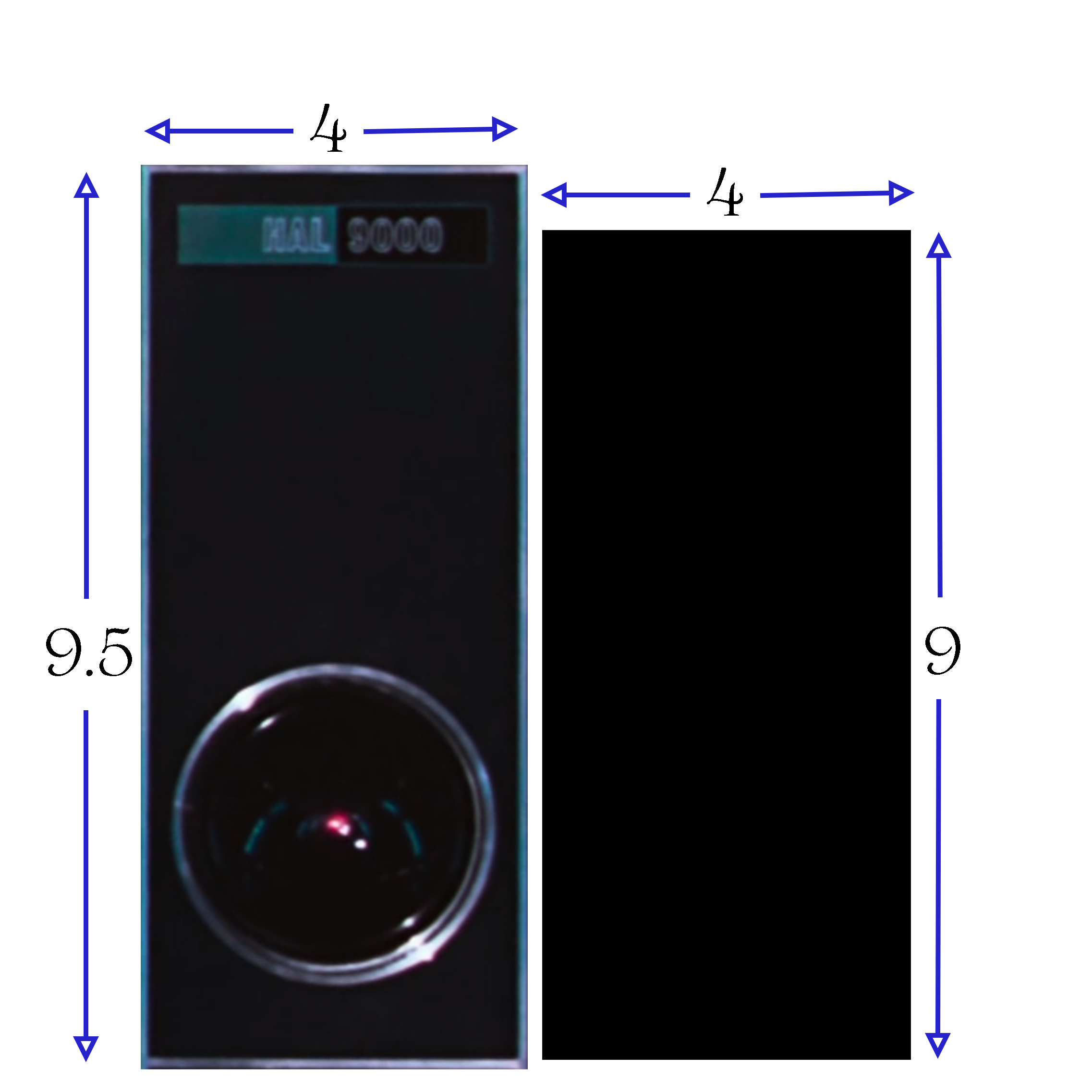
The Monolith does have actual dimensions, which are outlined in the book. It is 11′ 3″ tall, 5′ wide, and 1’3″ thick. These measurements correspond to the following formula:
12 × 22 × 32
1 × 4 × 9
Clever, eh? More so when we see that the aspect ratio of the film is 2.20:1, which is very close to the 9/4 ratio. Turned 90°, the monolith is the dark canvas upon which the film is shown, the window from the minds of Kubrick and Clarke are shown to the viewer:

In fact, the first 3 minutes of the film is just totally black, and with the soundtrack, utterly frightening. This is the darkness that haunts us all, the void, the nothingness from which we all come and to which we all go. It is the darkness of the night, of infinite space, of infinite time, of the mystery of everything that we can never fully comprehend, and the deepest, most primal fear we all share. But, for Kubrick, this darkness is about to be illuminated. This is the genius of Kubrick. He took self-reflexive art to a new dimension, pun intended.
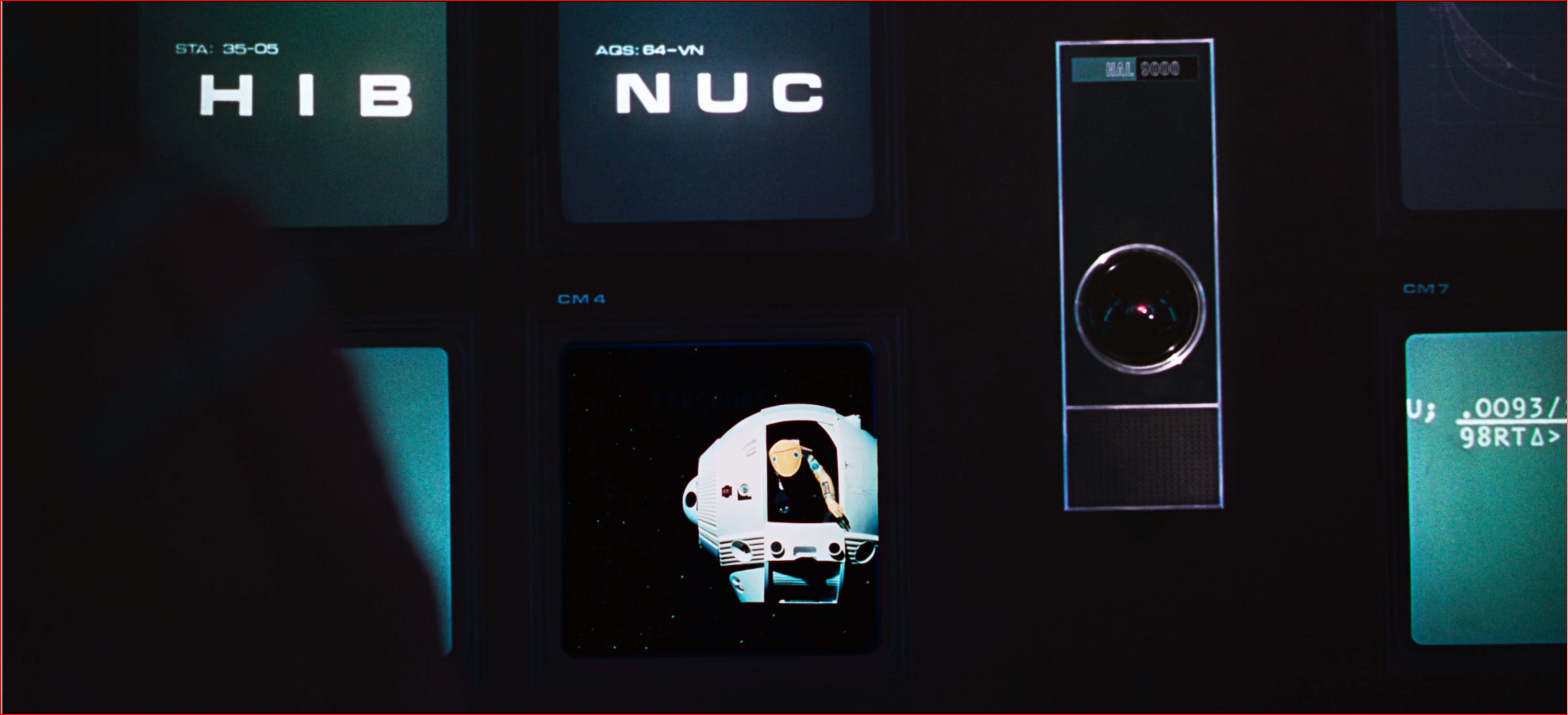
The other main character of the film is the HAL 9000, and HAL’s “eye” is a perfect circle with a red (Mars) pupil. HAL is an antagonist. HAL’s lens is situated in a Monolith, though the dimensions are not quite as accurate:
The Ovals
The other shape that plays a somewhat similar role is the oval, or the ellipse. This seems to be the symbolism that has flown under the radar for so many decades, but it is integral to the theme.
The ellipse is the fundamental shape of all planetary orbits. This fact was discovered by Johannes Kepler in the early 17th Century, almost simultaneously with Galileo’s efforts to use a telescope to view the moon.
The Kubrickian ellipse is most prominent in the pod’s window, and it is through that window the other main character, HAL 9000, spies on the astronauts who are trying to subvert it:
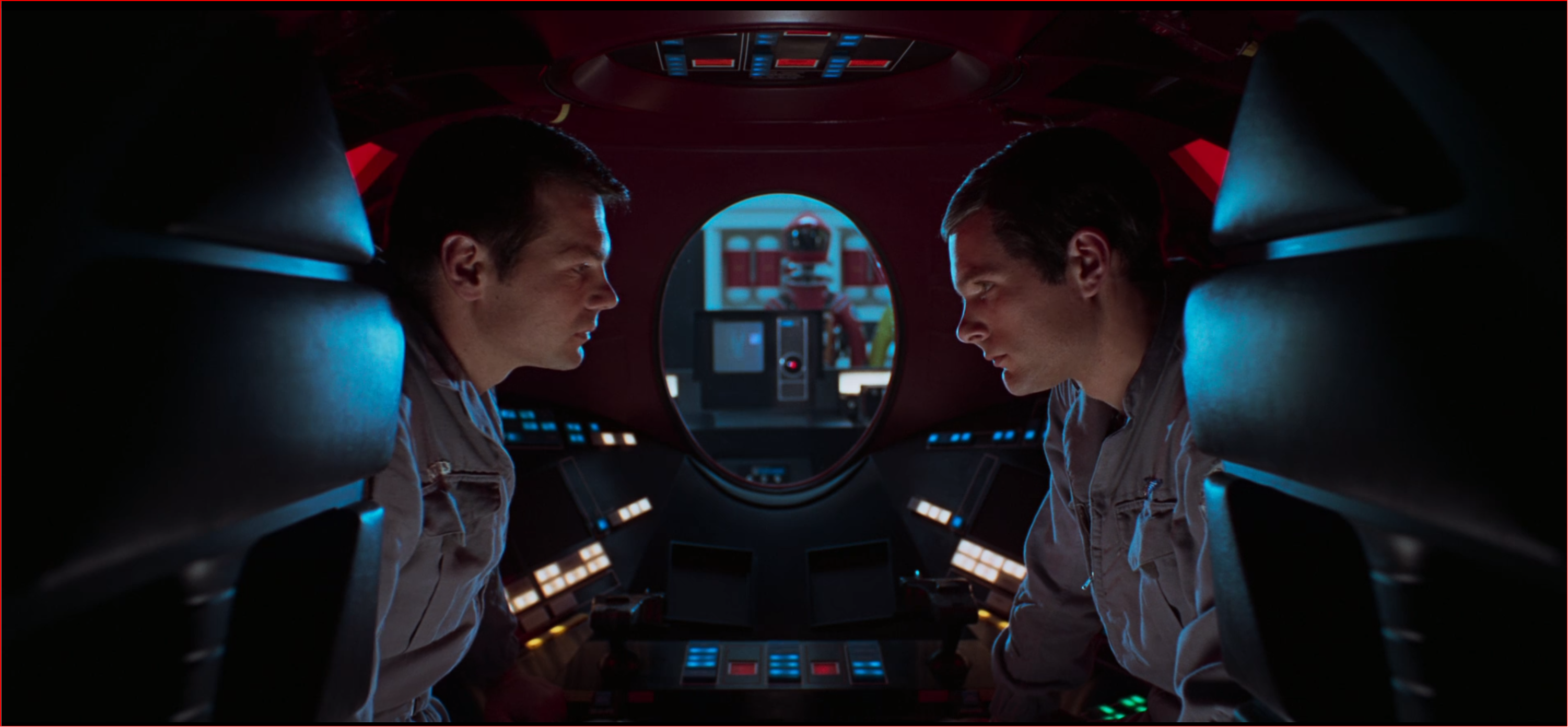

After the trippy sequence of the Jupiter encounter, we end up at what I call the “bedroom scene,” and we are introduced to that final sequence through the ellipse:
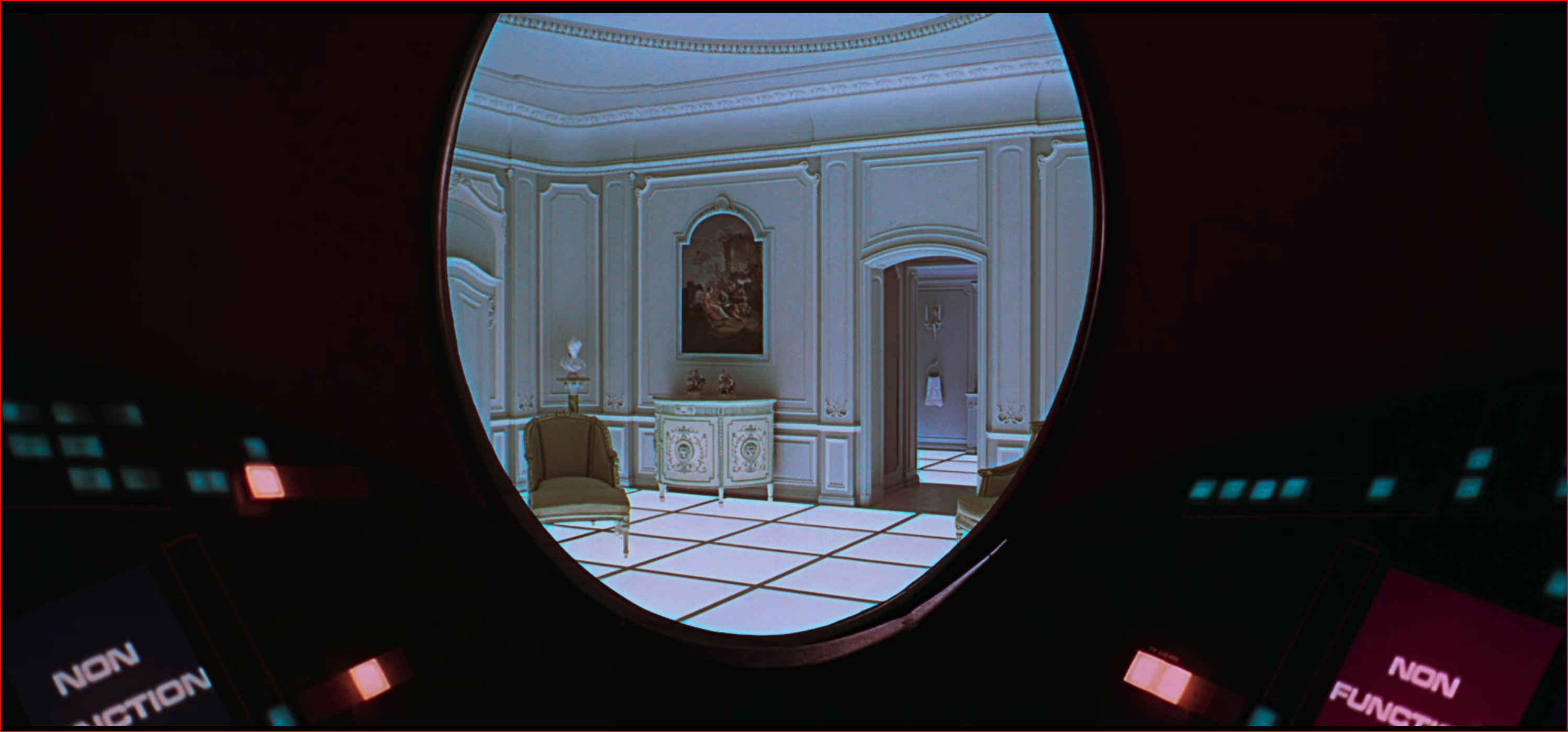
And, in that final bedroom scene sequence, we find ellipses galore! For instance, the frame of the artwork on the wall is topped with an ellipse, as shown in this still from the sequence:

Most importantly, perhaps, is the headboard of the bed, done in a rich velvet green color, the color of life:
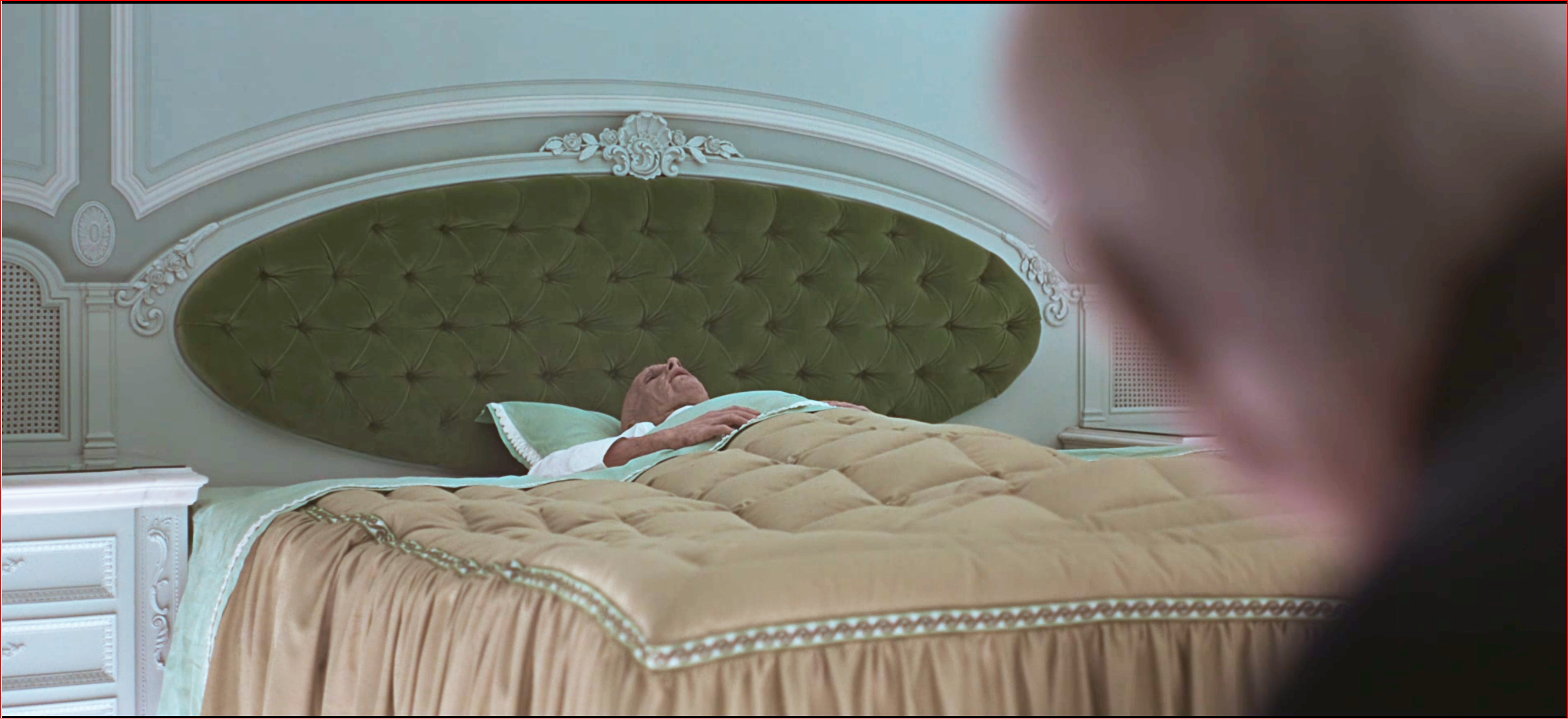
From there, the dying astronaut points to the Monolith that is attending his end:

Notice the large oval on the ceiling. Other ovals are present, tucked about here and there, such as the backs of the chairs, tablecloth, and the the wall:
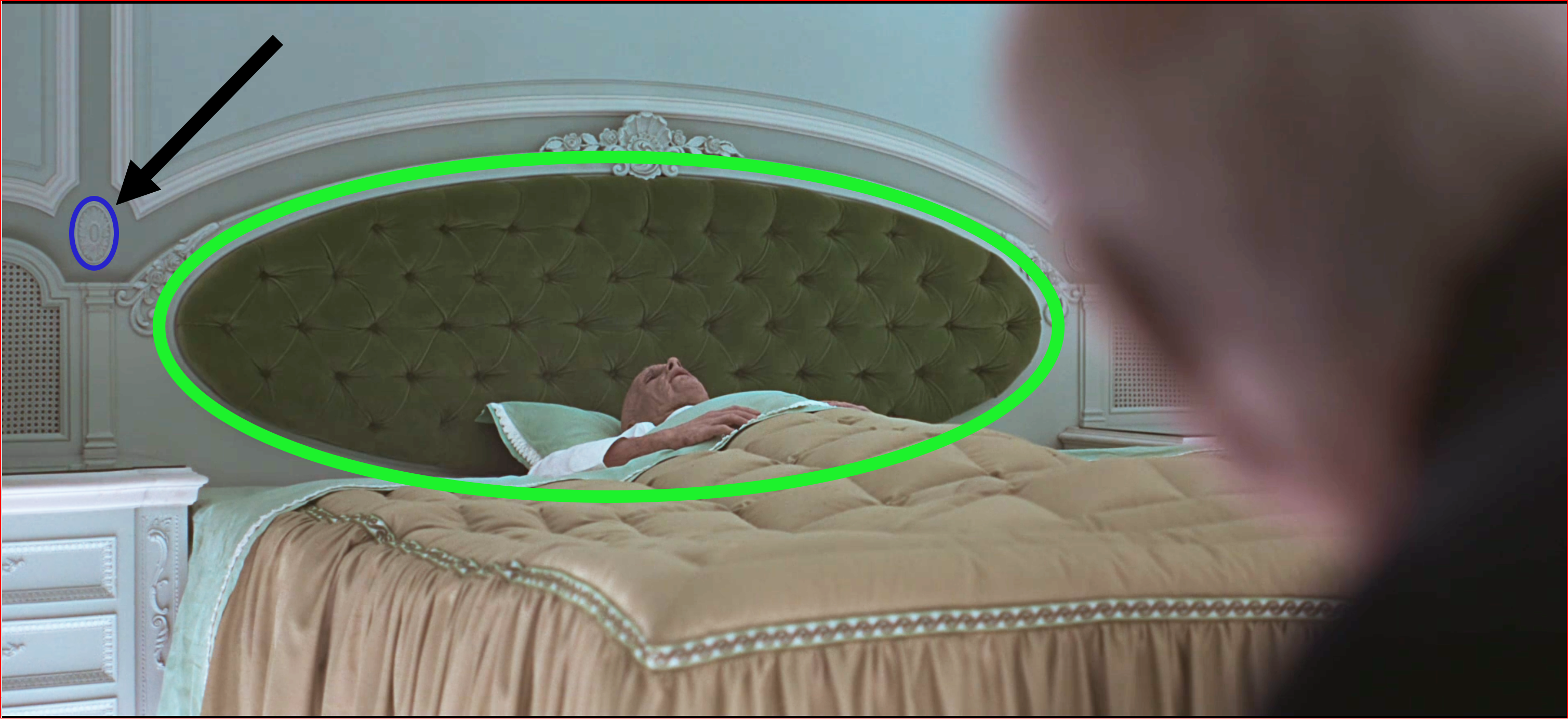
All of this begs the question, is there a relationship between the Monolith and the ellipse? Of course there is, as any rectangle will contain an ellipse, and this can be demonstrated through the magic of Photoshop:

And here we see that the headboard is more or less an ellipse that somewhat conforms to the Monolith ellipse:

The formula for the eccentricity of an ellipse is simple:

It’s just a matter of plugging in the numbers. We know that the Monolith is of the 9:4 ratio, and so we just have to determine what 16/81 is: 0.19753. That value subtracted from 1 gives us 0.80247. The square root of 0.80247 is 0.89580, which can be rounded up to this:
Monolith ellipse e = .896
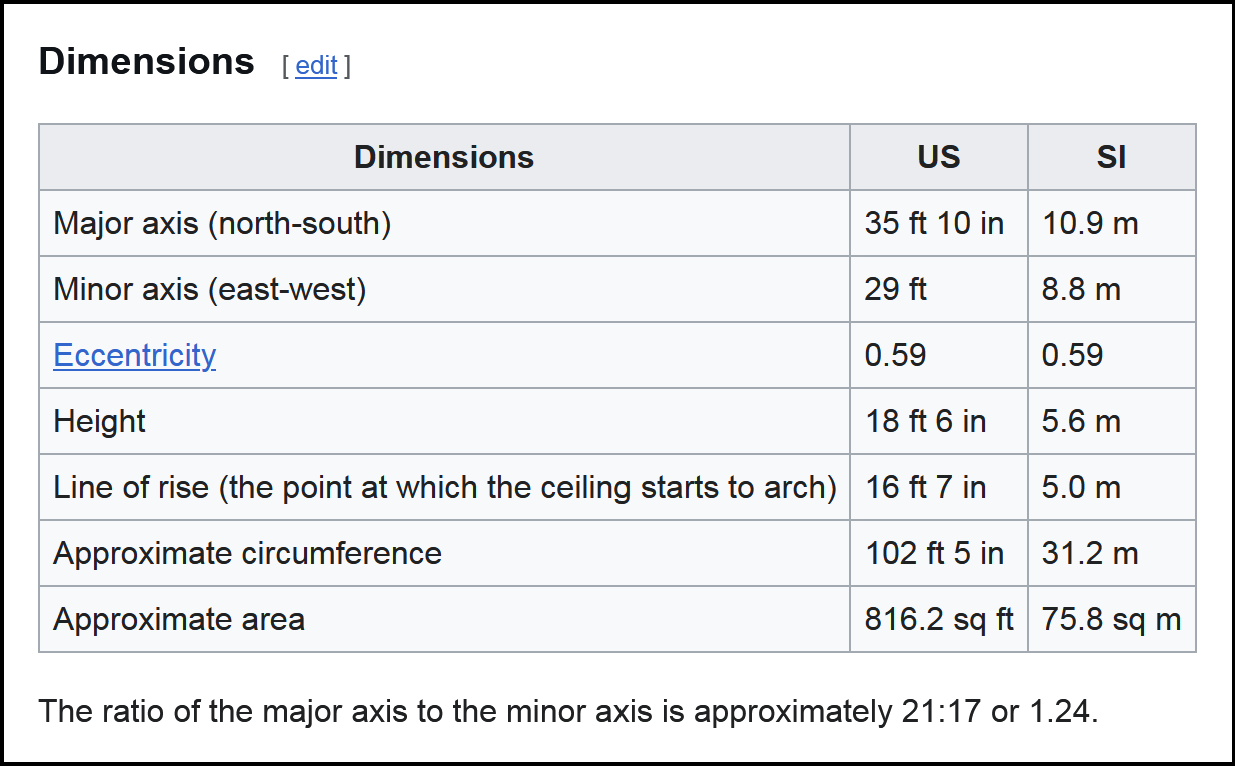
Compare that to the oval in the pod that has a 1.25 ratio of axes:
Pod ellipse e = .6
That is almost exactly the same as another famous ellipse in a famous town:
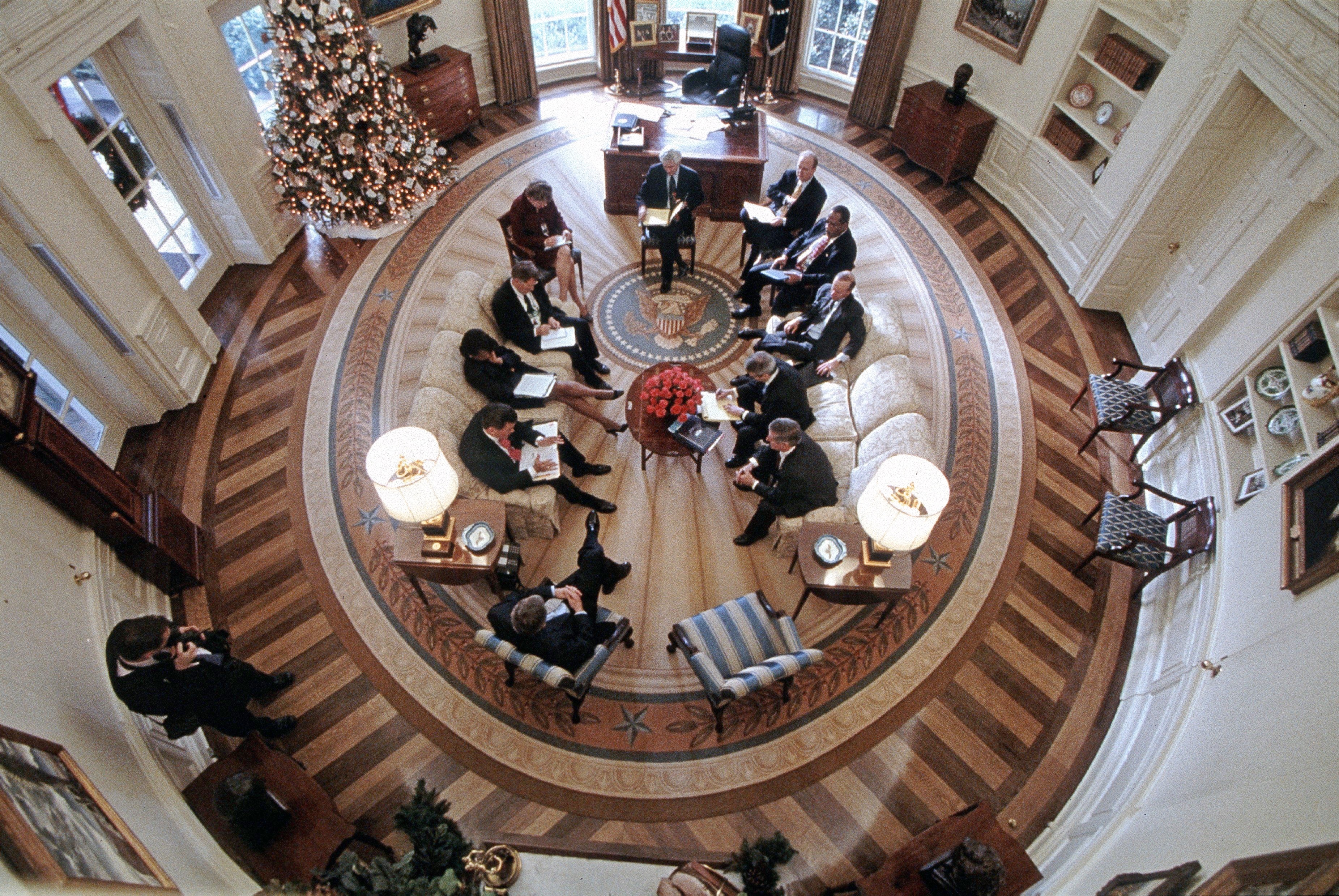
Yes, the “Oval Office,” inside the West Wing of the White House.
That may all be coincidental, but a little-known factoid about the film concerns where it was first shown – its premier – and that was in Washington DC. A chart for that moment does not disappoint. The Moon (where the Monolith is found in the film) is conjunct Aldebaran, the alpha star of Taurus, while a Shekinah is conjunct Markab, the alpha star of Pegasus, and while the Sun is conjunct Alpheratz, the alpha star of Andromeda; the Shekinah and the Sun bracket the square of Pegasus:

While not shown above, the north node of Mars is at 4°52′ of Taurus, conjunct Mars. The fixed star conjunct Mars is Sheratan, the alpha star of Aries, Mars’ traditional zodiac sign.
But what does this have to do with Dee?
The essence of Dee’s astrognomy is the egg, which exists in nature, and is a kind of conglomerate oval. His Monas symbolism has the egg-shape contain the planetary spirits:
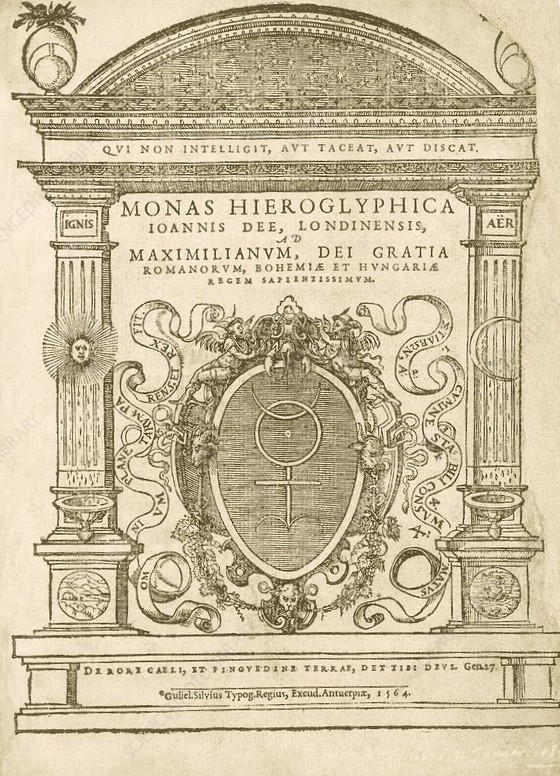
A closer inspection:

We can see that Dee is caught in the late Renaissance milieu, with the elements in the four corners. His unique contribution centers on the glyph in the center – a kind of amalgam of the standard glyphs of the luminaries with Mercury, Venus, and Mars. Dee’s glyph for Mars substitutes the arrow for the two adjoining semi-circles that represent the glyph for Aries.
Dee explains the reasoning behind this through his cosmic egg, where he plots the treks of some planets through the “oily” yolk, and the rest through the “watery” white:
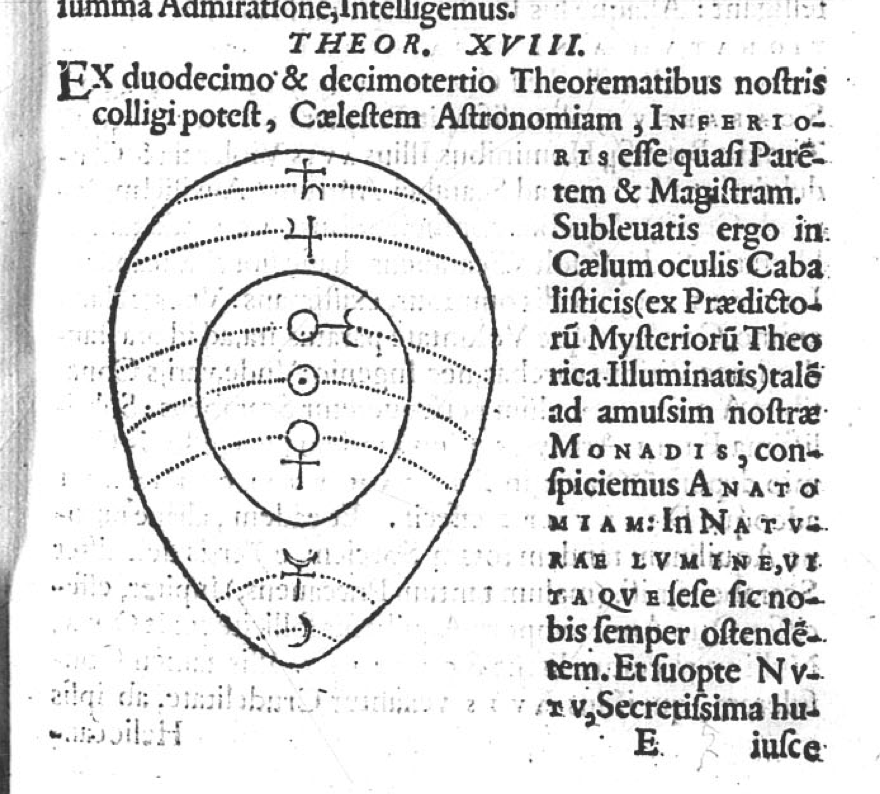
A careful reproduction:
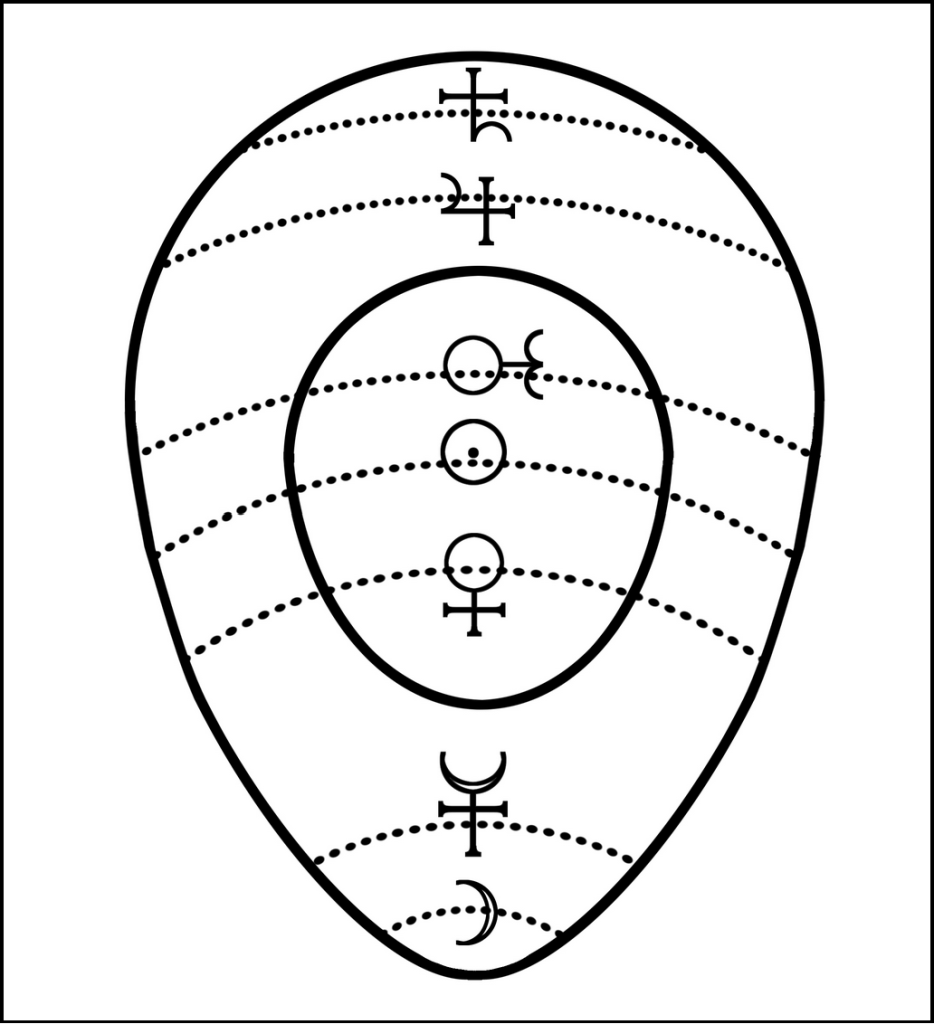

The yolk is getting closer to the ideal of a mathematical ellipse, and through that runs Mars, the Sun, and Venus – the planets of sexuality and reproduction. How does any of this fit in with the Monolith of known dimensions? Well, if we place Dee’s egg inside, and then invert it, the shell and the yolk are are amazingly tangential:

And, the symbol looks like our modern symbol for infinity. This is nothing short of remarkable, and tells us that Dee was on to something much bigger than he was letting on in his book. The first known use of the figure-eight motif as a symbol for infinity was by English mathematician John Wallis about 90 years after Monas was published. But, was Clarke really dissecting all of this, or did he stumble onto the truth? The implications are interesting, and more so amidst other goings-on that I will elucidate in Part II.
BUT, one more thing before I go. There are a lot of little details in this film that pop out on closer inspection. One of those items is the plate on the door to HAL’s internal memory bank:
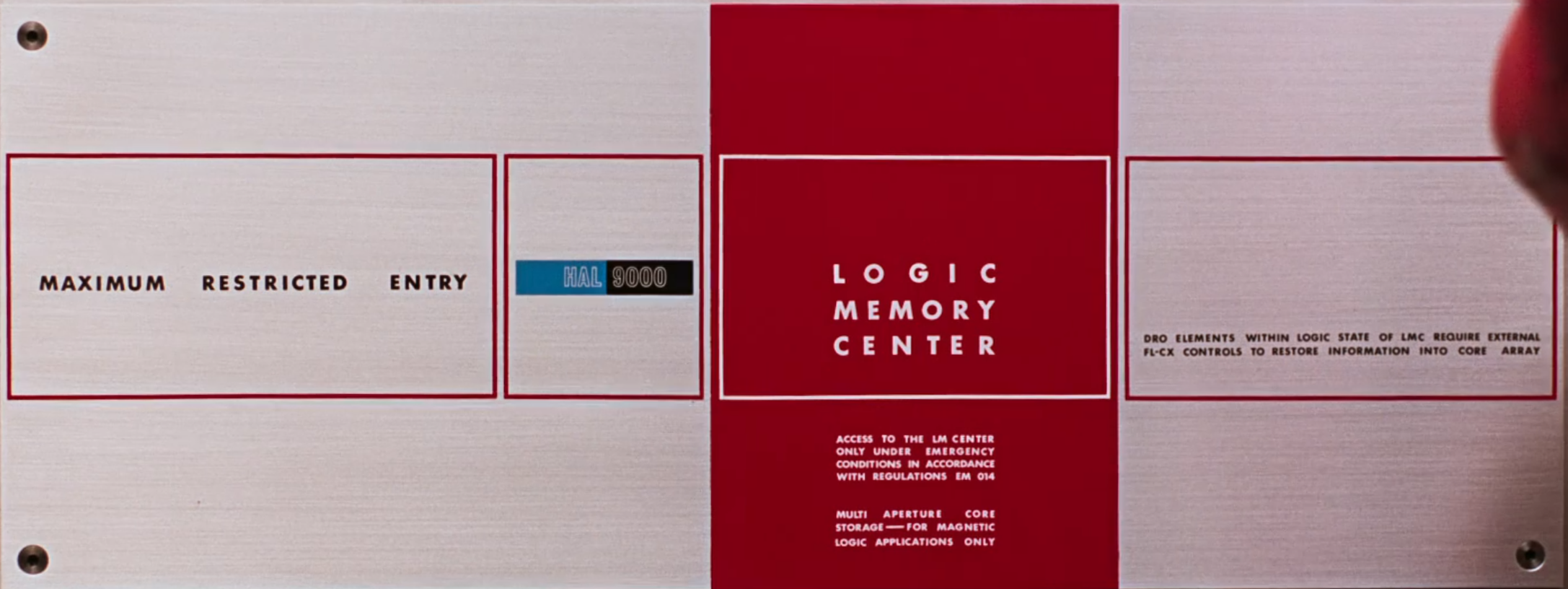
Notice how the lettering in the red rectangle is offset to the bottom, for some reason. That puts the letter G in the center, and that’s what Freemasons do:

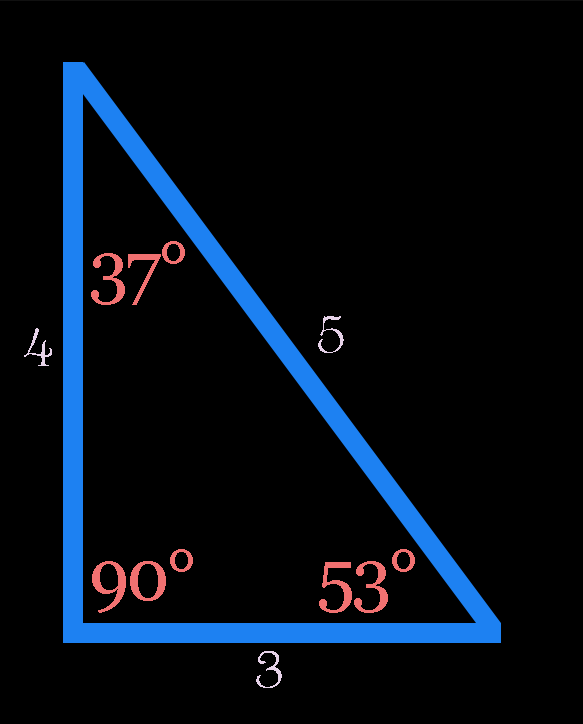
This will dovetail into why the compass is often open to 53° –


– Ed
 Emersion: A Blog from Occursion Media on Somewhat Interesting Hidden and Cryptic Astrological Histories
One thought on “2001: A Space Odyssey – it’s not a B Movie, but it is a Dee Movie, Part I”