There is an old, yet somewhat inaccurate claim that the central verse of the entire bible of both Old and New Testaments is Psalm 118 Verse 8 (also noted as 118:8). The claim can be traced back to the 19th Century, perhaps earlier. This AI-generated summary is hardly exhaustive, but gives us the gist of the matter:
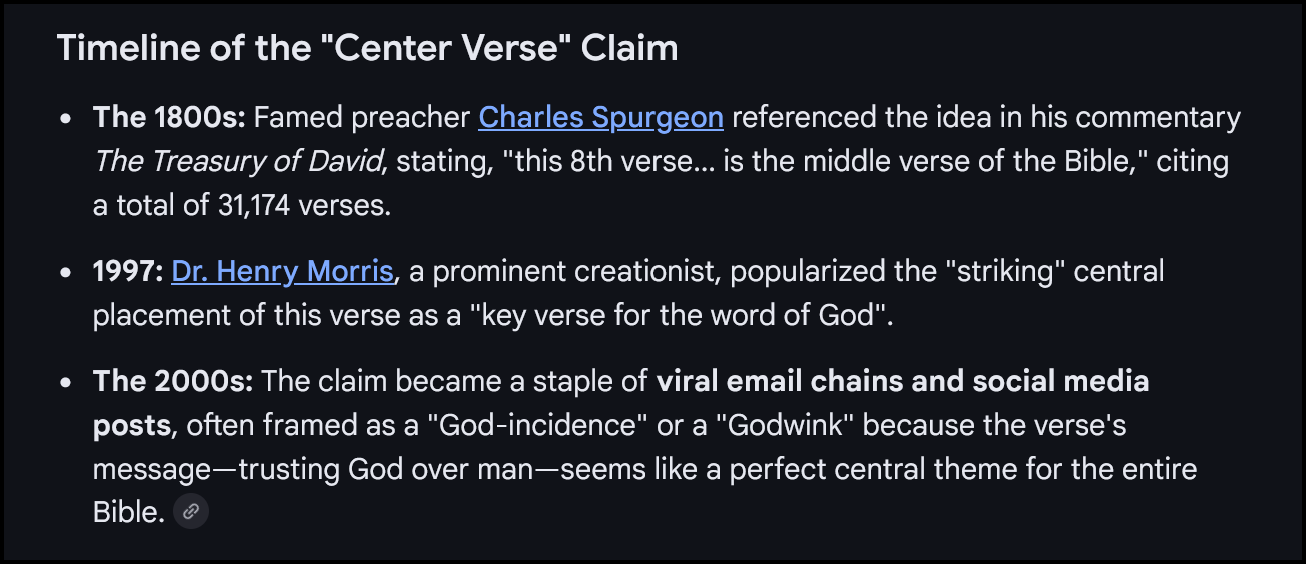
Claims such as this have a special chance for going viral. Who’s going to fact-check it? Probably no one. Did anyone go home and count up all the verses in their home bible to validate the claim? Probably not. It sounds good, so the meme gets passed on.
If someone did fact-check it, they would probably come up with what gotquestions.org and other fact-checkers concluded, that Psalm 103, verses 1–2, are at the center.
In fact, a true total of all the verses in any bible, amid the sundry numbering systems (some bible formats have different total numbers of verses), divided in half to find the center verse, will never yield Psalm 118:8. 188:8 is either is the center, or it isn’t, and because it isn’t, the claim is incorrect. Close only counts in horseshoes!
The question arises, then: why would a good Christian start a false claim? For kicks? Because he’s stupid? Or, is this an invitation to explore something cryptic? Since I always think there’s something up with everything, the only question is where to start.
Numerology and Matherology
If we count only chapters, there is a consistency, as every Bible has 1,189. If we split that number evenly, we get 594.5. Thus, there are 594 chapters before Psalm 118, and 594 after, leaving Psalm 118 as the central chapter. In other words, the modern Bible’s center chapter — the 595th — is Psalm 118. Ironically, the number of chapters that are not Psalm 118 are 1188, and this resembles the “118:8”.
Peculiar, no? Is this perhaps where someone with a case of dyslexia fuddled things, misapprehending the data, telling someone, and then the mistake gets repeated by others? Or, is it like this on purpose, directing the initiate to delve deeper?
What do we know for sure? We have identified Psalm 118 as the center. What is Palm 118? Is it a special Psalm in some way? Are there other things about its placement?
There must be something deeper going on with this, as the famed occultist Cheiro opined in his Cheiro’s Book Of Numbers (1926), where he makes the apparent error of defining the central verse of the bible as Psalm 118:8, but correctly tells us about the Psalms before and after:
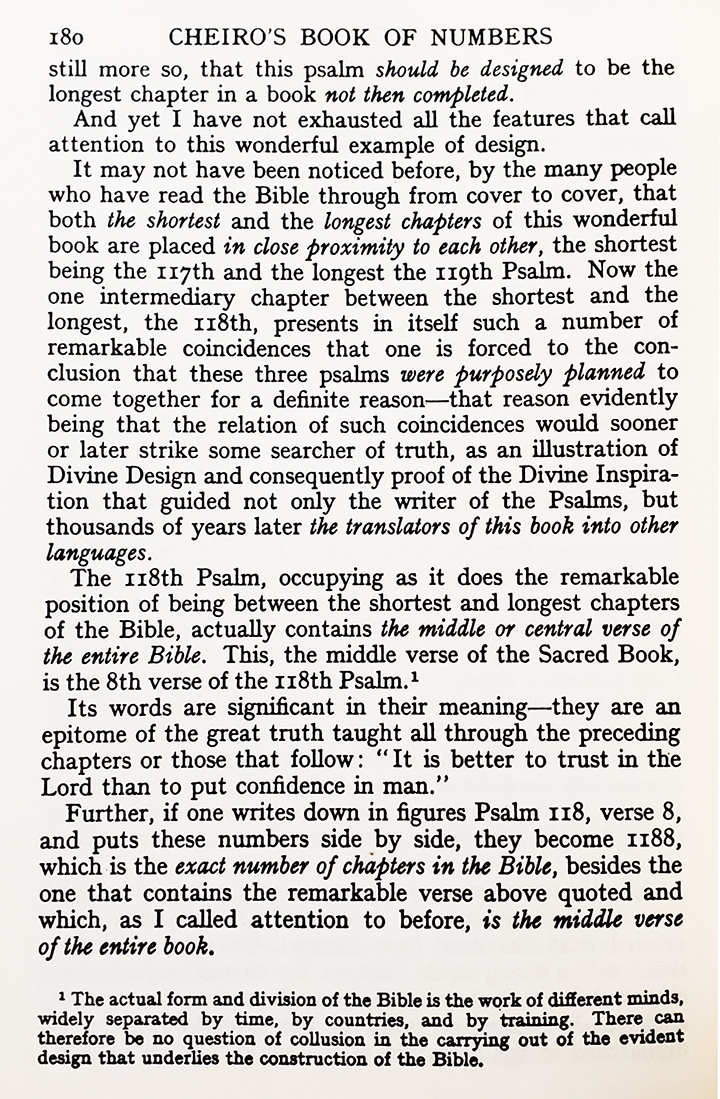
Was Cheiro was too lazy to check his work, or is he leaving us a crumb? He does go to a root of the claim, that the verse tells us: It is better to trust in the Lord than to put confidence in man. More on that in a bit.
As Cheiro correctly points out, Psalm 117 is the shortest chapter in the Bible with only two verses, while Psalm 119 is the longest chapter in the Bible with 176 verses. It seems interesting that these two length-endowed opposites are flanking the center chapter of the entire compendium.
Psalm 119’s 176 verses are divided into 22 sections of 8 verses, with each section given a letter from the Hebrew alphabet of 22.
Psalm 118 has a somewhat average total of 29 verses. The average Bible verse contains approximately 25.2 words. This average varies slightly between the Old Testament, which has about 27.6 words per verse, and the New Testament, which averages roughly 22.2 words per verse. The number 29 should ring a bell for astrologers.
Who put those verse numbers in the Bible?
The effort to order the Bible by chapter-and-verse that has survived to this day didn’t come about until the 16th Century in France, with a fellow named Robert Estienne. From there, iterations of which numbers go where, and how many, competed for attention, but the shorter-verses version of the Bible won out because it made verses easier to quote by memory. From my godawful AI bot:
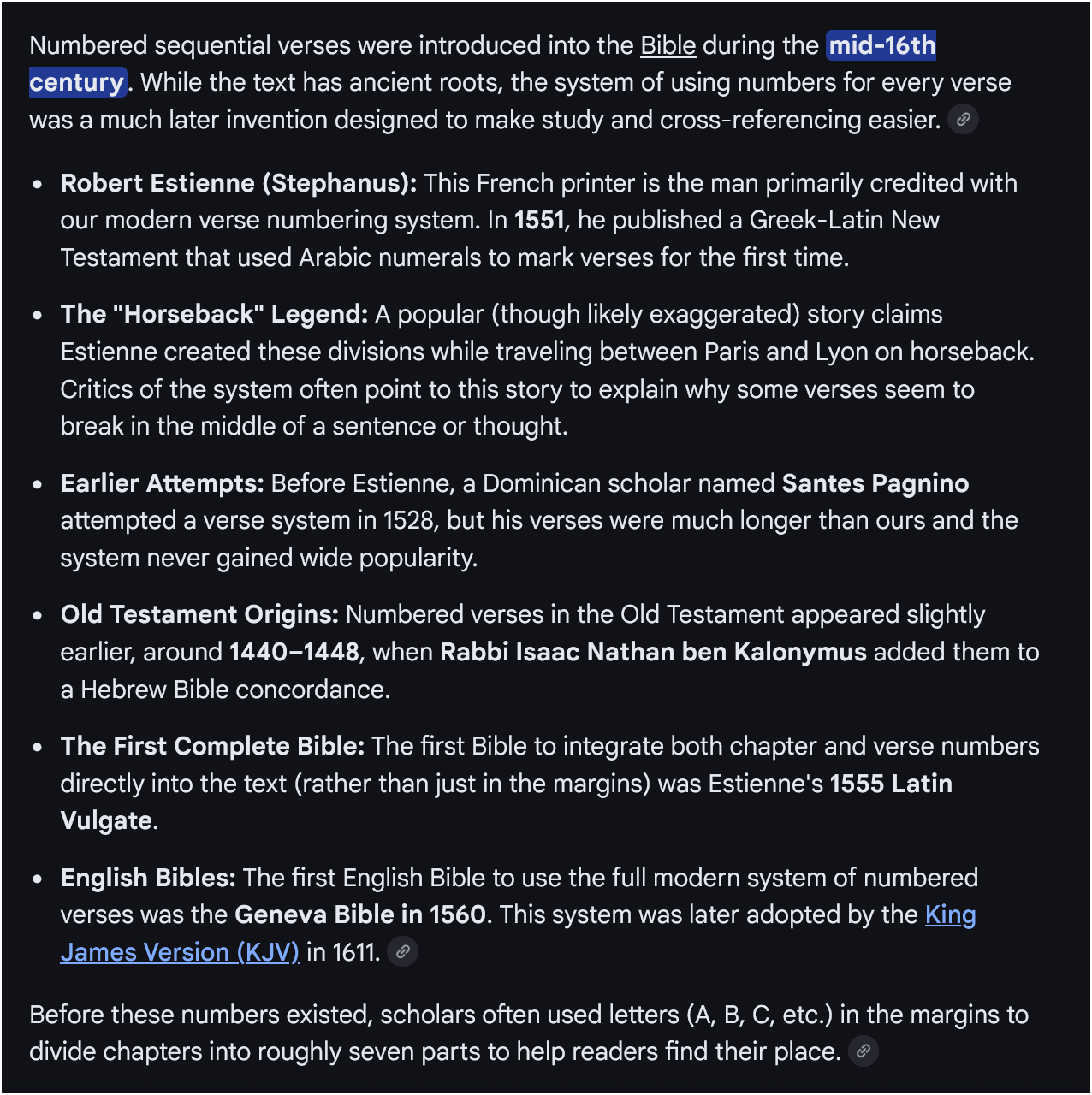
Nonetheless, we do know that the Estienne system 1) came out of the Reformation and is not a Roman Catholic invention, and 2) was Anglicized (King James version) at the same time Shakespeare was cutting his teeth in the theater business.
Martin Luther and Psalm 118
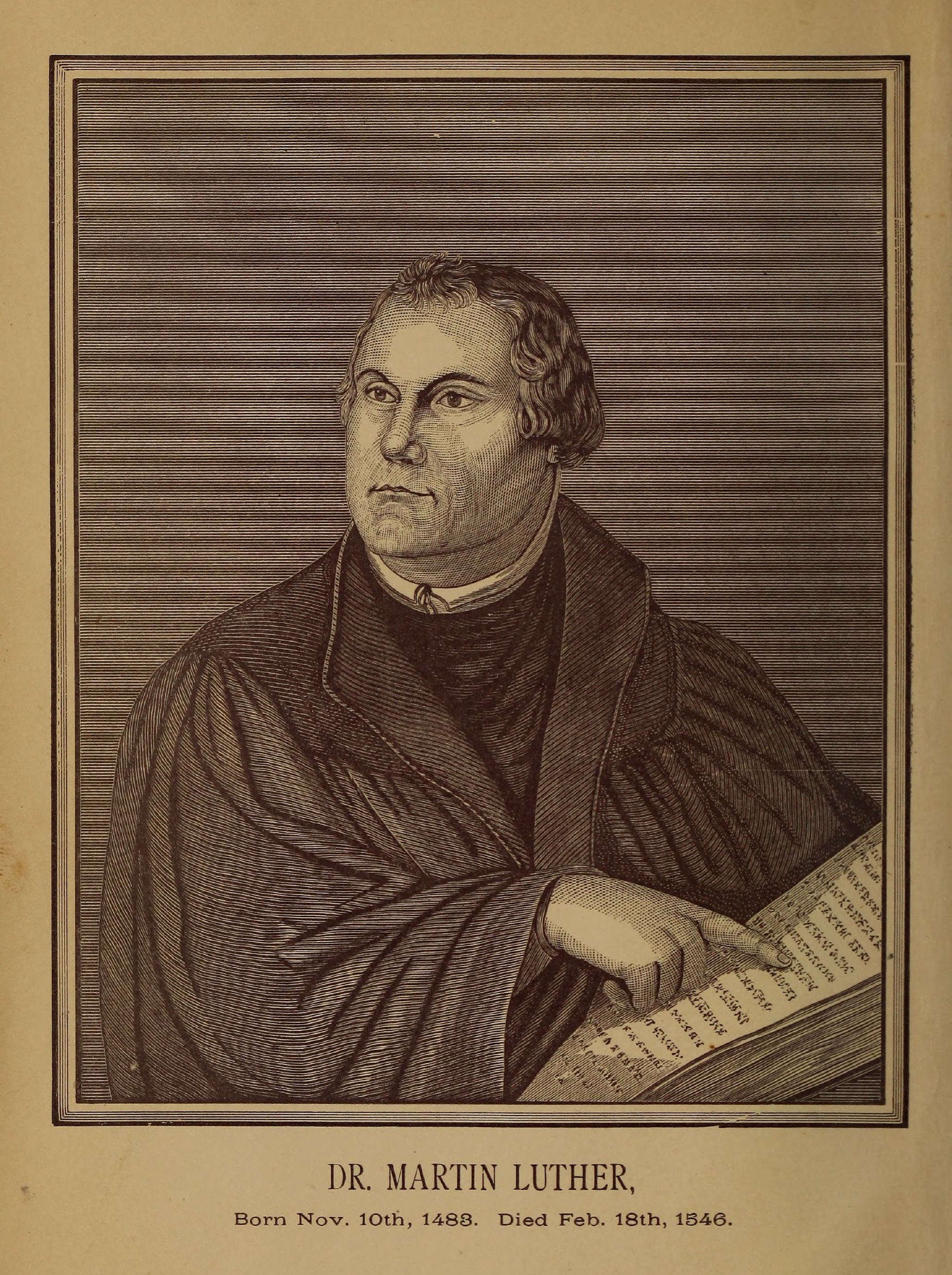
Martin Luther, who is given most of the credit for kicking off the Reformation 509 years ago, had a favorite Psalm, and it was 118. He seems to have developed his affinity to this chapter when he was “in hiding” after being found guilty of heresy and sentenced to death in 1520.
It was during his cloistering that Luther translated much of the bible from Latin into German, removing a huge blockage between the learned clergy and the proletariat.
Later, in 1530, while cloistered at Castle Coberg, Luther expounded upon his special affection for Psalm 118. “I shall not die, but I shall live and recount the deeds of the Lord” seems to have been the wisdom that gave him hope during the Imperial Diet, but that ended up being verse 17, not verse 8.
Was Psalm 118 truly the center of any bible Luther and his monastery had when he was a student? Surely not, as Luther’s formative years were spent with the Vulgate, in Latin, which included some of the Apocrypha. Luther chose to disclude seven books when he did his famous translation from Latin to German in the 1520s. Luther also wanted to jettison The Apocalypse (Revelations) because he thought it was silly, though it did end up in his final product.
From there, the Bible as contemporary Protestants know it was created, and the rest is, well, history. However, Luther didn’t know of a bible with ~30,000 verses.
Enter the Knights Templar and Holy Blood, Holy Grail
As the story goes in Holy Blood, Holy Grail (1982, Baigent, Lincoln, and Leigh), the Knights Templar fell into a schism after the Crusaders’ infamous 1187 defeat at the hands of Saladin at the Battle of Ḥaṭṭīn. This schism, according to the book, resulted in the Prieuré de Sion, which in English is the Priory of Sion, separating from the Templar’s military contingent it had merged with in the early years of the Templar encampment at the old Temple in Jerusalem.
The story also claims that an important elm tree was felled to symbolize the finality of the split, sometime in the year 1188 AD.
This particular tree-felling has actual historical fact behind it, though almost certainly the Templars were not involved, nor the dubious Priory of Sion. Actual history tells us that the Templars were indeed in a sort of schism, mostly over traitorous maneuvers by Grand Master Gerard de Ridefort, who was used by Saladin as ransom.
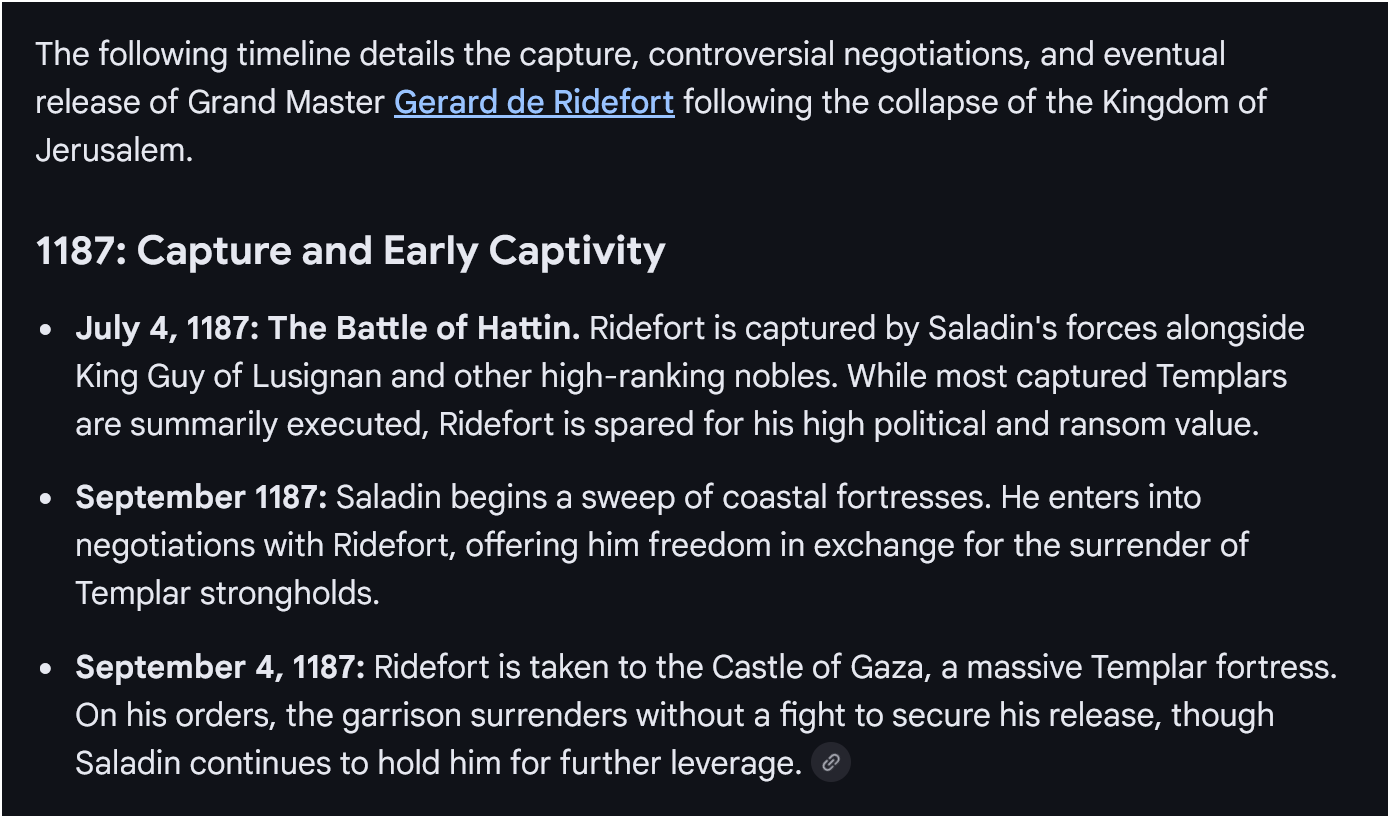
Back in Paris, the Templars were licking their wounds and trying to raise funds to go re-conquer the Holy Land. Ridefort’s unsavory deals with the Muslims did not play well with the aristocracy, and so the Templars splintered. AI bot continues:
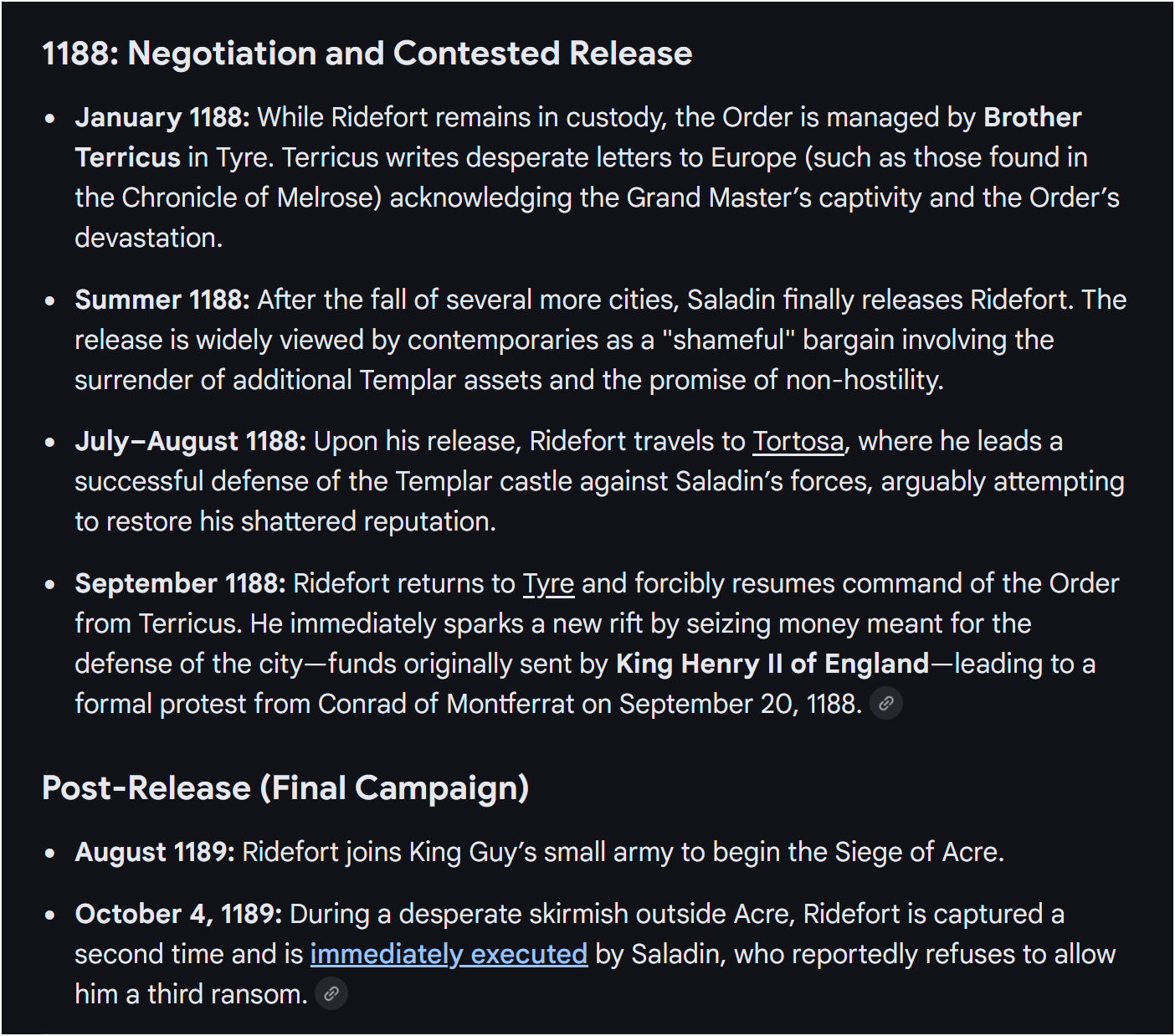
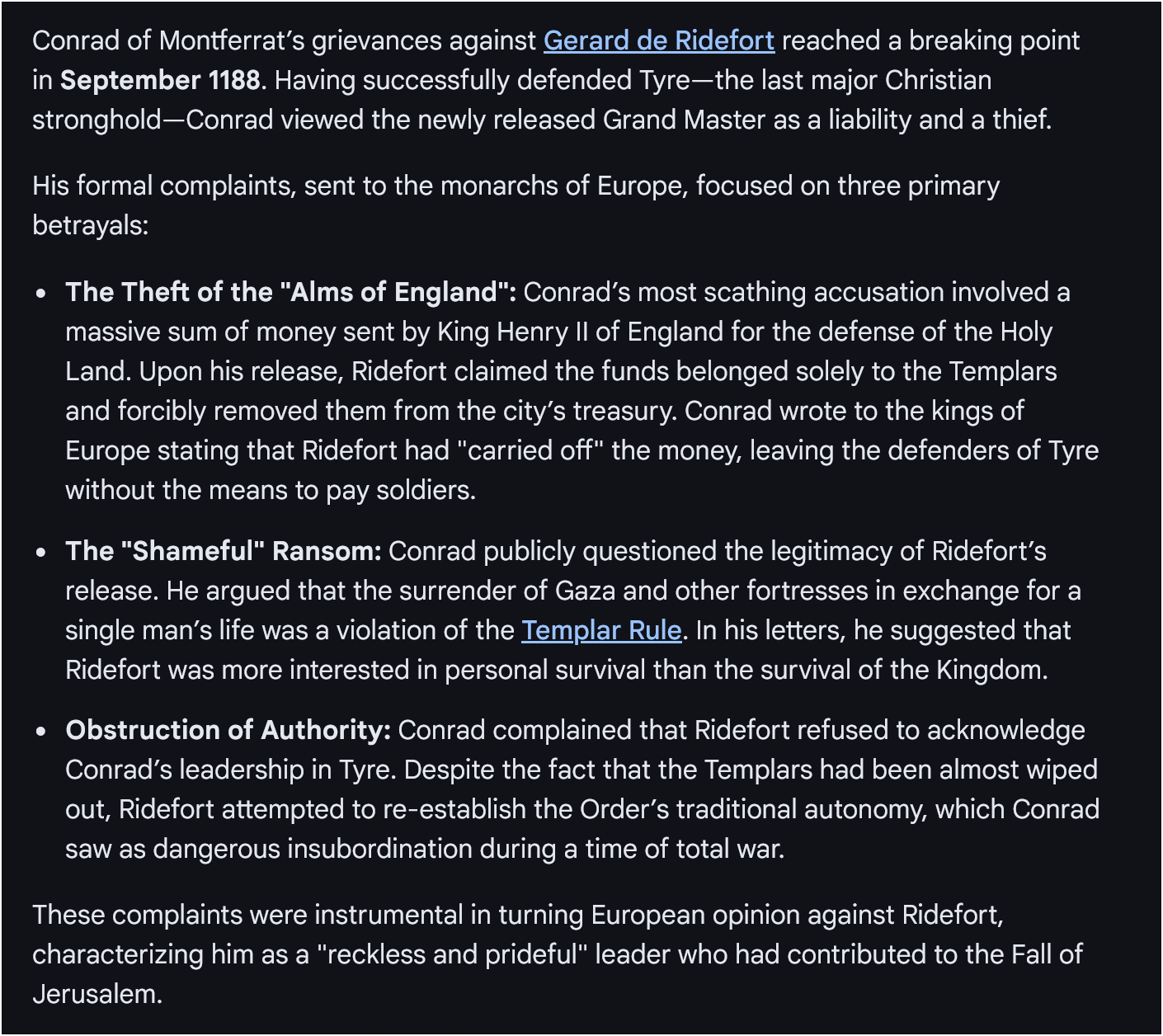
That’s a summary of the factual history of 1188. The “alternative facts” story of the Priory of Sion, laid out in HBHG, was concocted by a fellow named Pierre Plantard, who was hoaxing the HBHG writers (and many others) extensively. (It can be found on pp. 91-6.) It’s not worth getting lost in the minutiae of this hoax, but it is important to know it exists, because the numerology part of it (wink wink, nudge nudge) seems to have flown over everyone’s head.
The Priory of Sion is an alternative history, but it is also the crux of the claim that an entire alternative history of Christianity exists in the real world, covered up by the Vatican powers with any means possible. That alternative history contends that Jesus had descendants, and that those descendants skedaddled off to the south of what is now France after the Crucifixion. The Holy Grail is actually the ongoing bloodline of Jesus, carried forth by a mysterious yet central Mary Magdalene.
Were Protestants like Estienne somehow sneaking some sort of code into the Holy Bible that alluded to the Templar rift of 1188, and only guys like Plantard could figure it out? Was this Templar schism – a splitting of one order into two contingents – somehow encoded in the splitting of the Holy Bible into two halves? It’s an intriguing proposition, even if it is rather benign. For what purpose?
We know that the verse-numbered version of the Christian Holy Bible appeared in the mid-16th Century, and that’s quite a bit of time beyond the highly troubled year for the Templars of 1188, and even the final demise of the Templars as a cohesive, overt organization in 1314. Yet, the claim that Mr. Plantard planted about 1188 was that the Templars split into two factions – one being the public face of the order, and the other – the Priory of Sion – being a sort of secret monastic diplomatic service. This scenario could make sense as the Templars were making pleas to royalists to help fund a Third Crusade that would take back all that was lost to Saladin, but alas, this Priory of Sion is unproven.
Is There a Templar-Luther Connection?
This hypothesis has been raised in the past, even though no solid scholarship can make the case for it. The thinking goes like this: The Templars, in a kind of diaspora after their dissolution by the Vatican, continued to exist both underground and outside of the Empire, and plotted revenge against the Papacy. 200+ years after the the burning-at-the-stake of Grand Master Jacques De Molay, they found their big chance with Martin Luther and his Protestant crusade against the Papacy.
Luther definitely didn’t do it all on his own. He had help, and plenty of it, from not only his own inner circle of students and colleagues like Philipp Melanchthon, but through the aristocracy itself – aristocracy that had its own motivations to devolve from the Vatican’s temporal authority. (Never forget that politics is always part and parcel of organized religion.) None of it has any direct ties to the Templars, though.
The Devil Is In The Tarot Details
Perhaps the secret Templar-Luther hypothesis was egged on by none other than Arthur Edward Waite, who placed Luther’s symbol of the sacred rose (inverted) on the Death XIII card, carried by a knight, and interacting with The Hierophant V, in front of a rising sun and the two towers of The Moon XVIII card.
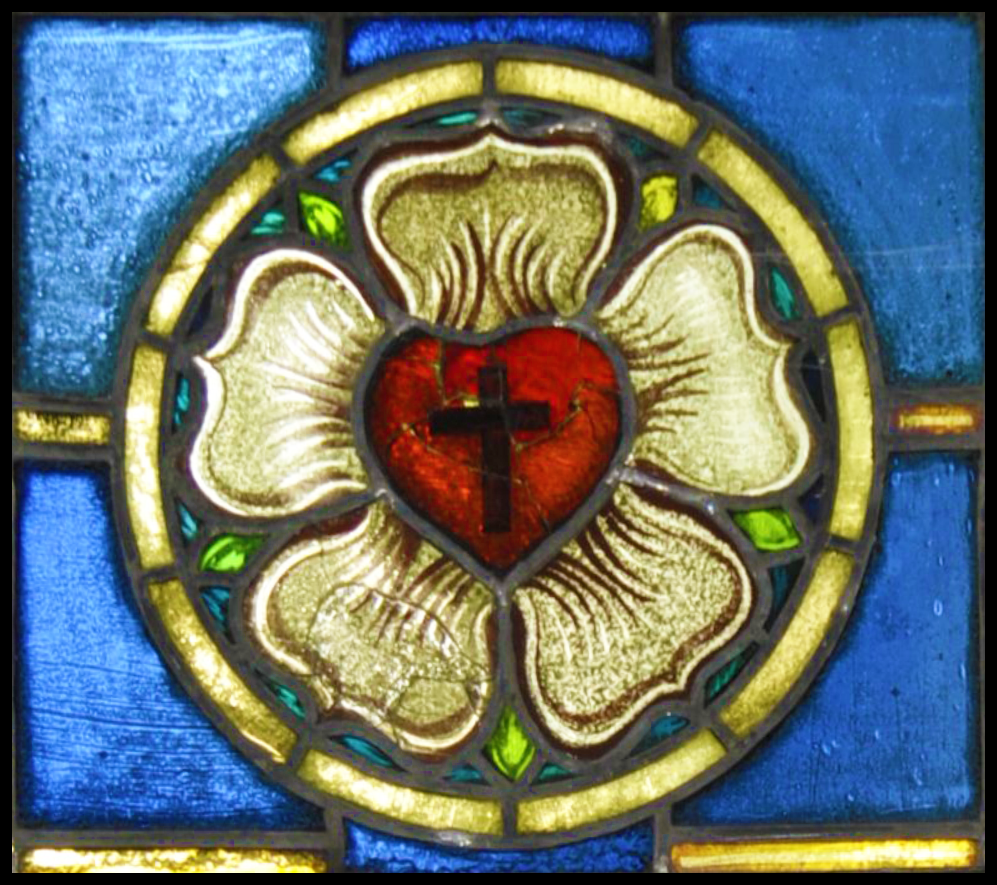
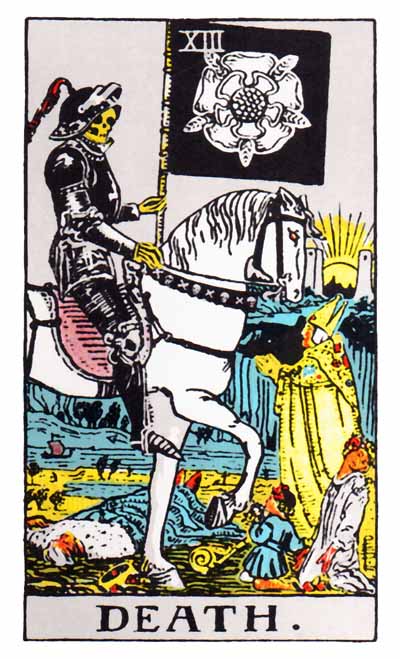
Again, verse 17 of Psalm 118: I shall not die, but I shall live and recount the deeds of the Lord.
So, we have with Waite’s deck the Sun on Death XIII, and a five-pointed symbol (Venus), which are all pointing to those planetary cards in the tarot – The Star XVII, The Moon XVIII, and The Sun XIX, which are the sequence 17 – 18 – 19.
Could this be related to the special Psalm sequence of 117 – 118 – 119?
The tarot sequence of 17 – 18 – 19 are precisely in the order of Venus – Moon – Sun that we find in the ancient world of over 3000 years ago, well before Christianity and the Roman Empire, reaching back into the Bronze Age:

Cheiro also expounds upon those tarot numbers in the same book cited above:
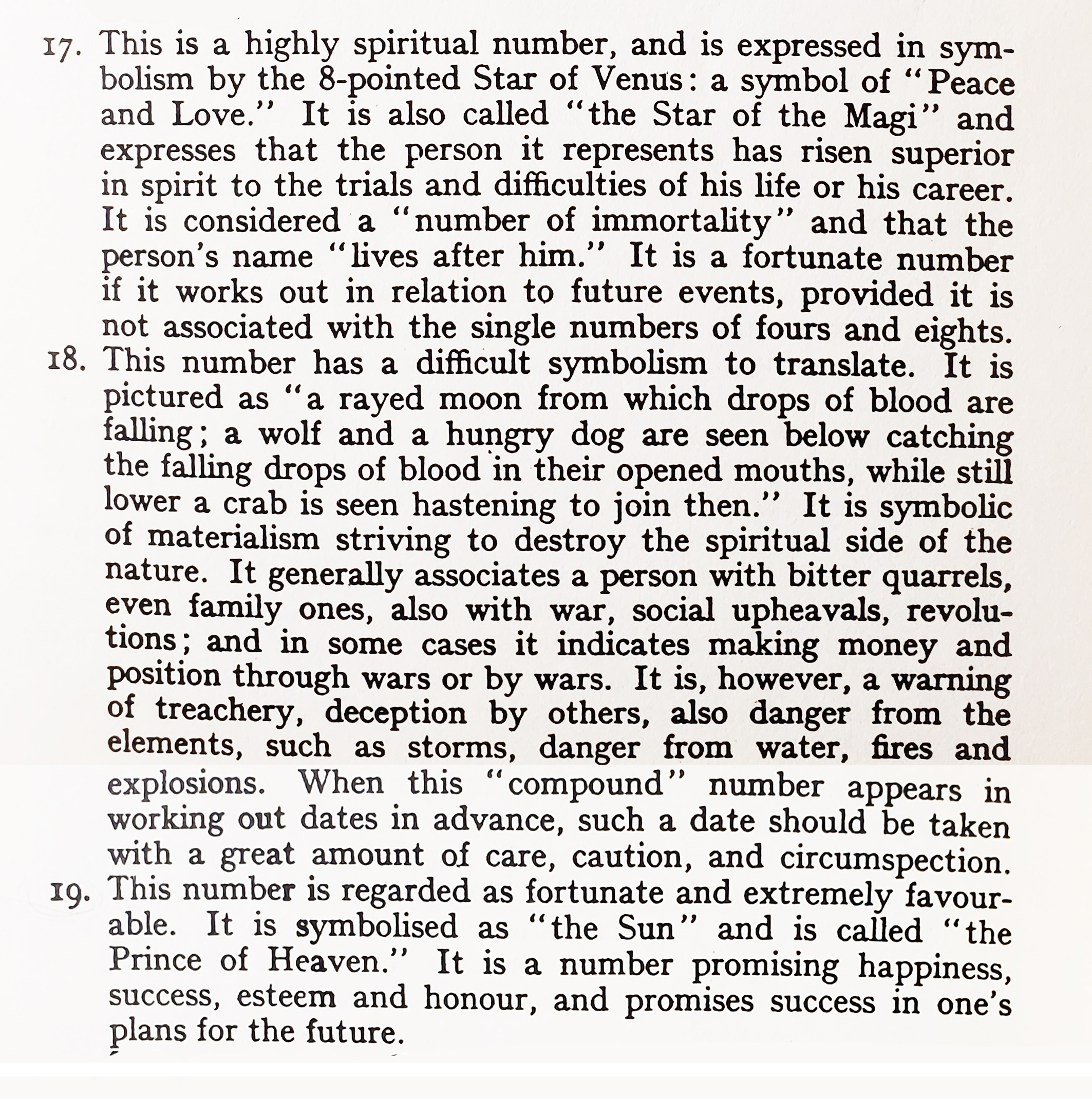
Note here that Cheiro insists that the star of The Star XVII card is Venus, and also “the Star of the Magi.” Venus and the biblical “star of Bethlehem” are one in the same.
Could it be that the Psalter’s chapters were ordered so that 117-118-119 somehow alluded to these heavenly bodies?
We should go back to the chapter lengths:
- 117 – 2 verses
- 118 – 29 verses
- 119 – 176 verses
117: Venus appears to us not as an orb like the Moon or the Sun, but only as a point of light. If The Star XVII is Venus, this might explain why Psalm 117 has only two verses, but Venus also has two identities: Morning Star, and Evening Star.
118: 29 is a lunar number, as the average length of a lunation period is 29.5 days. Thus, that tracks with the 18 label for The Moon XVIII card.
119: The 176 verses of Psalm 119 tend to outshine the other two in magnitude, just as the Sun does in the real world, and in the tarot in The Sun XIX. Both Venus and the Moon disappear into the Sun’s aura. The division of this chapter into 22 sections may also allude to the 22 as the number of degrees between Venus’ exaltation at 27° Pisces and the Sun’s exaltation of 19° Aries.
In a table:
| Tarot Card | Tarot Card # | Psalm | Verse count |
| Venus | 17 | 117 | 2 |
| Moon | 18 | 118 | 29 |
| Sun | 19 | 119 | 176 |
I would also note that 2 + (29 × 6) = 176.
In my series called Astrological Elements of the Tarot, parts 1, 2, 3, 4, and 5, I explain how 17, 18, and 19 are astronomical numbers related to those planets, with the 18 being the basic Saros Cycle number of years between two eclipses near the same date in the solar calendar.
Given all of that, it is either a very unique coincidence that all of these seemingly disassociated elements resonate, or, it is part of some surreptitious plan to mask sacred knowledge right in front of us without us even knowing, but available for the right people to comprehend. Cryptography is all about hiding things in plain sight. But, to what end? What purpose does this serve? cui bono, cui prodest?
There have been plenty of claims made over the centuries that the Bible is encoded with all kinds of stuff. The Bible Code book of the late 1990’s comes to mind as the latest fabulism, but published claims about hidden bible secrets are probably more common than books about how to lose weight.
There is no question in my mind (at this point) that the tarot is a nexus of coding from various religious and mythological institutions, such as how the Latin Cross fits in the Major Arcana’s implied 3 × 7 geometry:
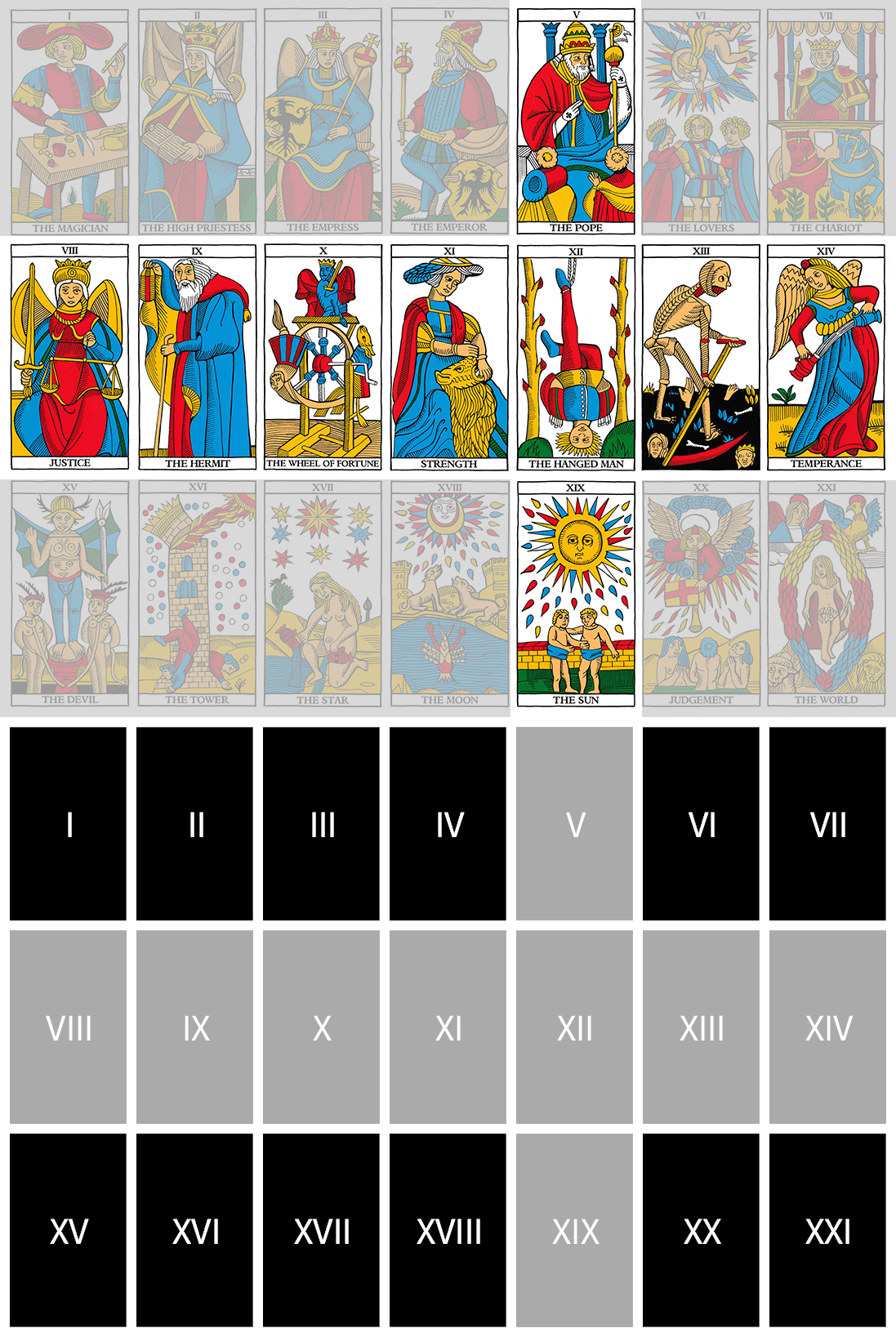
This, of course, shows that the Hanged Man XII is being crucified, flanked by The Hierophant V and The Sun XIX (which are man problems), though if the center of the cross is at Wheel of Fortune X, the motif is that the world will crucify you through your own worldly desires (flanked by The Empress and The Star, which are female problems):
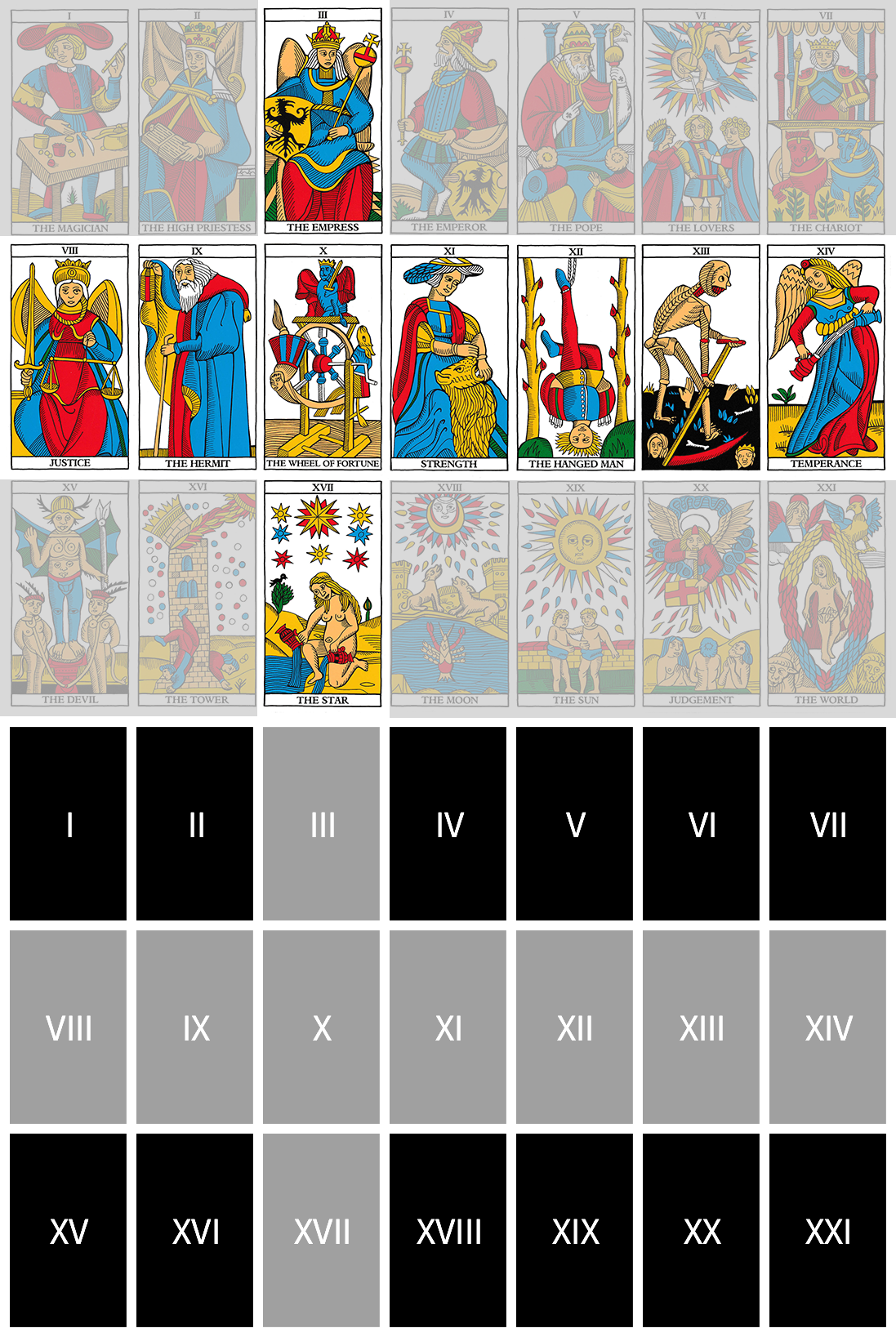
Note in these diagrams that three planet cards are at the center of the third row, which could beckon an allusion to the center-of-the-bible thesis.
The only other shape 21 cards can make is a 6×6×6 triangle, and you can read into that what you will.
When we add The Fool, we get 22 cards, and as many have claimed, that is one for each of the letters in the Hebrew alphabet. It also correlates to the 22 parts of Psalm 119. 22 relates to 7 through the ancient approximation of π – 22/7. The circle shows us the basic manner of understanding the cards through counterparts. Just add or subtract 11 to find the opposite trump card:
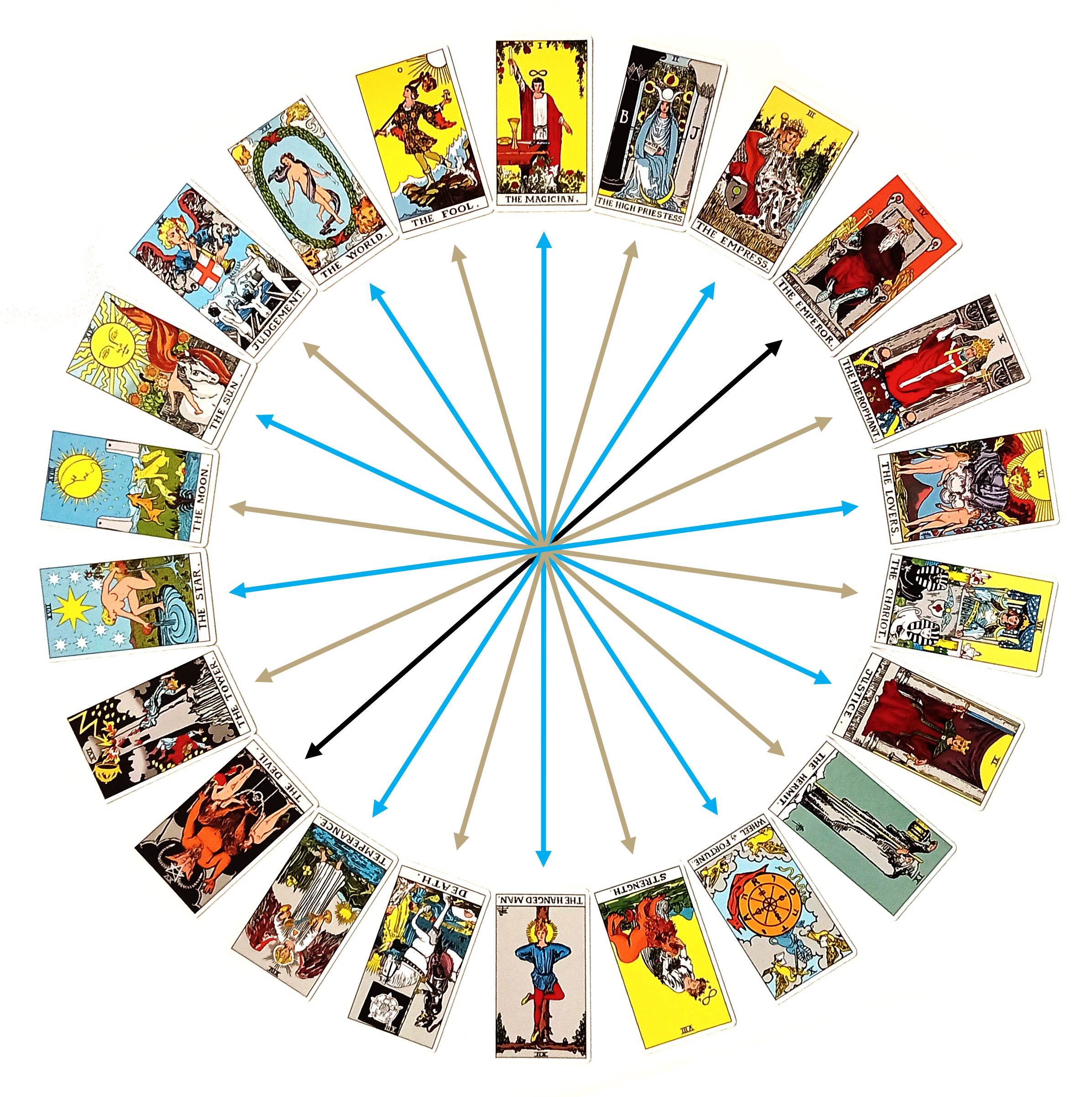
Notice that The Star (Venus) XVII is opposite The Lovers VI, who number two, equaling the number of verses in Psalm 117.
In this scheme, Death XIII is a counterpart to The High Priestess II, which features the two columns of Jachin and Boaz, which symbolize the two towers of a temple that also define the floor plan based on the sun’s shadows cast at the solstices. Boaz represents the winter solstice, where the Sun is low at noon but the full moon’s are highest at midnight.
Most important, perhaps, is the pairing of The Magician I with The Hanged Man XII. If the Hanged Man is being crucified as per the 3 × 7 matrix Latin Cross, then the Magician is the Savior as well, doing his stint on the planet before the fated problems start with the rabbis and the Romans.
Conclusions
Any sacred symbolism worth it’s salt will have multiple layers of meaning operating simultaneously, and we’re seeing that here.
What is this thread of symbolism telling us — this code that places Venus, Moon, and Sun at the center of the Protestant Bible?
The Bible is, in so many ways, built on a foundation of astrological elements. Let’s just call it astro-gnomy. The only way to properly understand the Bible is if one reads it as an astro-gnomical allegory. The ancients all saw the heavens as eternal and the world as perishable. That perishable world is everything under the lunar sphere, and the eternal heavens are all above the lunar sphere. In the ancient sensibilities, the Moon’s sphere is the boundary between heaven and earth.
God inhabits that eternal, unchanging realm above the lunar sphere – that place up there that we can only dream of traveling to. The Xian mind thinks we may somehow get into the heavens with God if we are found worthy. All cultures have an extensive set of rituals and superstitions around the death moment, and “ascending into heaven” makes total sense if the earth is stationary at the center.
What does that say about “God” then? The only way to know this “God” is through the stars he decorated his heaven with. Isn’t that a kicker!! It sounds heretical, and blasphemous, but this is the secret that the Templars “discovered” “under” Solomon’s Temple – that the saga of the savior is just an astro-allegory. Why else have the astrologer-priest Magi visit the newborn if not to hint strongly at a Venusian plot?
- Priory of Sion: Year 1188
- Center of the Bible: Psalm 118
- Moon at the boundary of heaven and earth: Card 18
- The MAG-i: astrologer-priests from Persia.
- MAGic: things the Magi do.
- Mary MAG-dalene: astrologer-priestess and lunar partner of Jesus.
- Maga: Italian word for a witchy woman.
- MAGA: fake Christians of the USA who worship the Antichrist.
- Trump: the Antichrist, the Emperor-Devil axis in the trump cards.
Welcome to the inner sanctum. (You’ll need an ephemeris.)
– Ed
P.S. I made it all the way through without saying that 119 is a reverse 9/11! You’re welcome. I may edit this blog piece in the future.
 Emersion: A Blog from Occursion Media on Somewhat Interesting Hidden and Cryptic Astrological Histories