
In Part I, I explained the true nature of the Star XVII card by decoding the classic tarot’s astrological math and number symbolism.
In this part, we will go a bit further with how the two most notorious irrational (mystical) numbers of pi π and phi ϕ are encoded in the deck, as well as prime numbers. From there we can go to Part III and discuss constellational symbolism many other cards in the major arcana.
A Bit More on the Sun and Moon
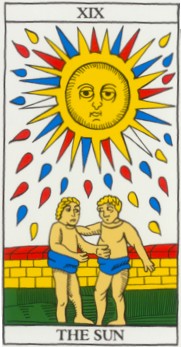
In Part I, we learned that the Sun XIX (sometimes written as Sun XVIIII) corresponds to the exaltation value for the Sun that comes from Ancient Babylonian astrology – 19° Aries, as well as the the number of years for any lunation to repeat in the same degree of the zodiac – the Metonic cycle.
The likely reason for the Sun’s 19° exaltation value is as the square root of the number 361, which is the number of degrees in a circle plus one: (360 + 1). The Sun’s astrological symbol is ʘ – a circle with a dot at the center. Of all the celestial bodies, the Sun’s circular form varies the least in phenomenological terms; the only exceptions are solar eclipses (very rare) and sunrise/sunset deformations of the disk, which we now know is due to atmospheric refraction.
In contrast, phenomenologically, the Moon only reaches a full circle once a month; its symbol is a crescent, as it spends most of its time being less than a circle.
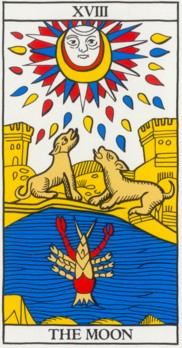
In our astro-number symbolic paradigm, the Moon is given the number 18 to match the Saros period of 18 years and 10 or 11 days. Of the the astrological cards, it is the only even number, and divides nicely into the 360 of the circle: 18 x 20 = 360.
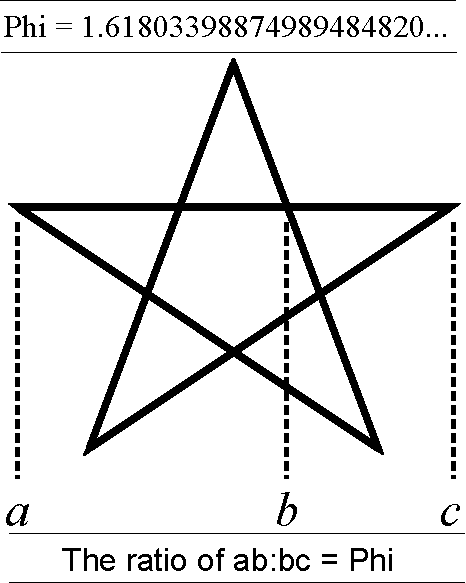
Another bit of astro-number mysticism with the 18 relates to the pentacle and pentagram shapes, which are composed of 72° angles, 36° angles, and 18° angles. The value of a right (square) angle is 90°, and 18 + 72 = 90. As noted in Part I, the pentacle shape is encoded with ϕ.
We could summarize our degrees-of-the-circle math as follows:
- 17 × 21 = 357 — value of the exaltation of Venus — a prime times a phi.
- 18 × 20 = 360 — Saros / Goal-Year “exaltation” value of Moon — phi angle of 18°.
- 19 × 19 = 361 — Metonic / Goal-Year “Exaltation” value of the Sun — the square of a prime.
How to Get to 78
The easiest way to get to 78 is by adding all the integers from one through twelve:
1 + 2 + 3 + 4 + 5 + 6 + 7 + 8 + 9 + 10 + 11 + 12 = 78
78 is more than just an accidental number. It has mystical values that that lies below the tarot surface. Let’s start with the basic structure again. The tarot is 56 minor arcana, 21 trumps, and one wild Fool card:
56 + 21 + 1 = 78
How many more ways are there to get to 78? Can such a mysticism only work with the Fool card as a “+1”? The Fool, as either a non-number, a null, or a “0”, is technically a Fibonacci number, so we might imagine this metaphysical equation:
“0 = ±1”
Zero is the sum of a “+1” and a “-1”, as in:
[(-1) + (+1)] = 0
(Click here for more Renaissance-era attitudes about the number one.)
In the first part of this series, seven major arcana cards with numbers in the φ “Fibonacci” sequence were listed:

However, since the Fool is also a Fibonacci number, then we have a metaphysical equation which is a kind of “78”:
“7 + 0 = 8”
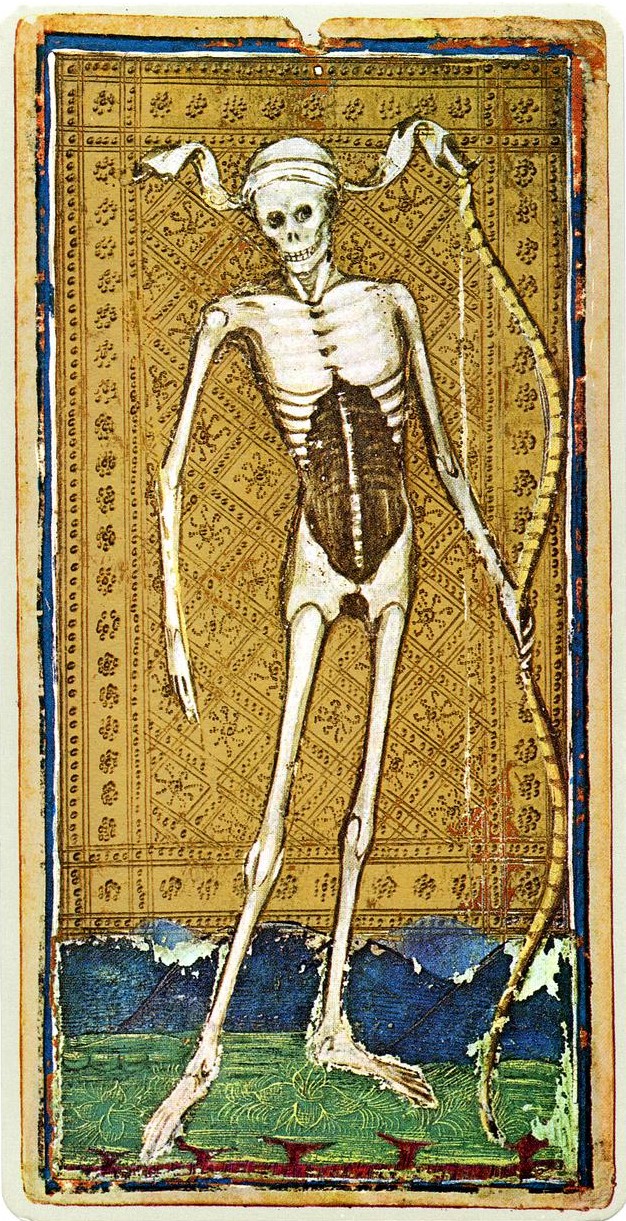
We also noticed that the Death XIII card – a most important and scary card – has the “13” label. Does this have to do with the Fibonacci sequence? Some have speculated that the Death card was given the “13” to symbolize the date in October of 1307 that the Knights Templar were betrayed by a French king and the papacy, thus the inclusion of a horse in the card’s motif as an unlucky number, as the Templars were all killed. However, we don’t have a horse in the early prototype Visconti deck. What does our Renaissance magic suggest?
We do know that 13 both a Fibonacci number and a prime number. Is this significant? Let’s compare….
The Fibonacci sequence continues on as such:
- 0, 1, 1, 2, 3, 5, 8, 13, 21, 34, 55, 89, 144, 233, 377….
The prime number sequence is as follows (including the 1, which I know is not now considered a prime):
- 2, 3, 5, 7, 11, 13, 17, 19, 23, 29, 31, 37, 41, 43, 47, 53, 59, 61, 67, 71, 73, 79, 83, 89, 97, 101….
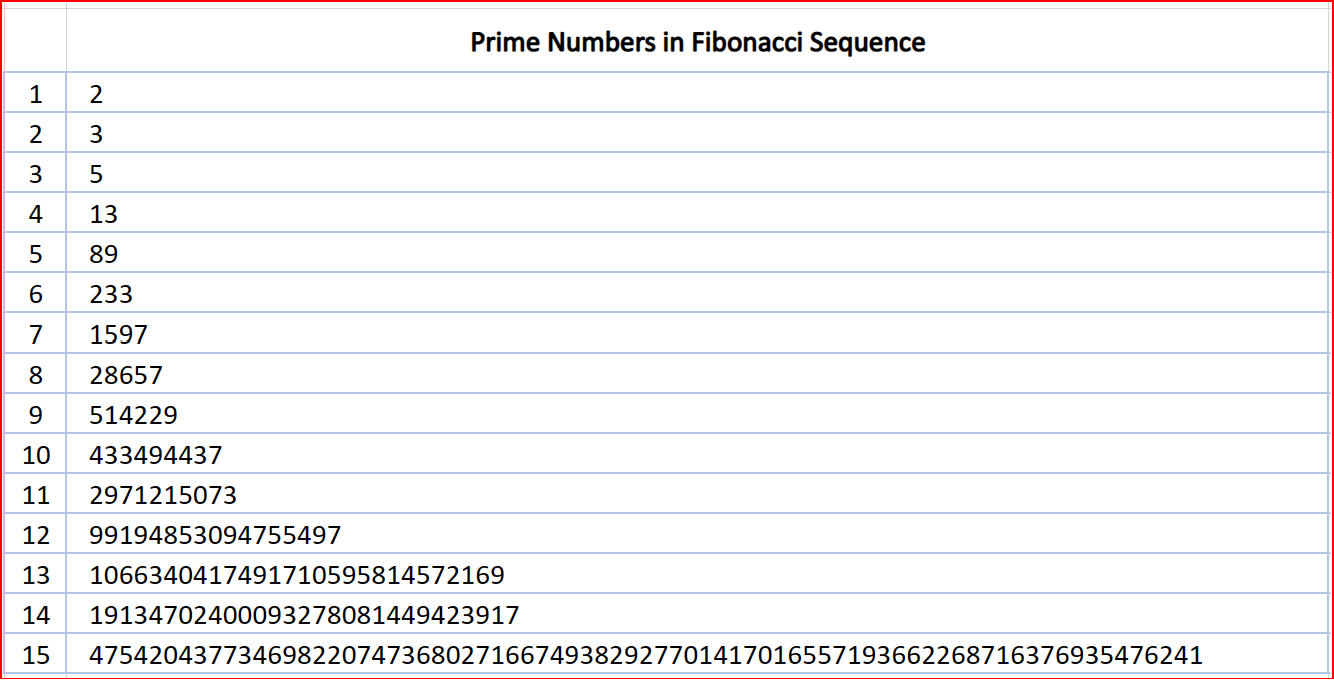
The number of primes that are less than 78 is 21, and 78 + 1 = 79, the 22nd prime number.
Interestingly, the number of primes in the Fibonacci sequence are startlingly few, as shown in the table on the left. But, 13 is the 6th unique non-zero Fibonacci and also the 6th prime.
Six is an important number in the field of prime numbers, and any prime “p” greater than three can be expressed as either one of these two equations, with “n” being an integer:
- (n × 6) +1 = p
- (n × 6) -1 = p
Remembering that a standard 52-card deck has 13 of each suit, symbolizing the number of weeks in a season, the 78-card tarot also is divisible by 13:
- (6 × 13) = 78
- (2 × 3 x 13) = 78
The number 79 is a prime, so the 13 factors as follows in the prime equation above:
- (13 × 6) +1 = 79
So, not only are 6 and 13 an essential basis of tarot math, it also explains why the Lovers VI card is also a kind of death card.
The ϕ numerology of the tarot tends to interact with prime numbers as follows:
- (2 × 11) = 21
- (3 × 7) = 21
- (3 × 7) + 1 = 22
- (2 × 11) = 22
- 21 + 1 = 22
- (8 × 7) = 56
- (5 × 11) + 1 = 56
- 55 + 1 = 56
- (7 × 11) = 77
- (7 × 11) + 1 = 78
There are seven possible sums of two primes that yield 78:
- 5 + 73 = 78
- 7 + 71 = 78
- 11 + 67 = 78
- 17 + 61 = 78
- 19 + 59 = 78
- 31 + 47 = 78
- 37 + 41 = 78
These sums can be seen in this array of the prime sequence, sans 2 and 3, with (the number of primes in between):
- 5 + 73
- 5, 7, 11, 13, 17, 19, 23, 29, 31, 37, 41, 43, 47, 53, 59, 61, 67, 71, 73 — (17)
- 7 + 71
- 5, 7, 11, 13, 17, 19, 23, 29, 31, 37, 41, 43, 47, 53, 59, 61, 67, 71, 73 — (15)
- 11 + 67
- 5, 7, 11, 13, 17, 19, 23, 29, 31, 37, 41, 43, 47, 53, 59, 61, 67, 71, 73 — (13)
- 17 + 61
- 5, 7, 11, 13, 17, 19, 23, 29, 31, 37, 41, 43, 47, 53, 59, 61, 67, 71, 73 — (10)
- 19 + 59
- 5, 7, 11, 13, 17, 19, 23, 29, 31, 37, 41, 43, 47, 53, 59, 61, 67, 71, 73 — (8)
- 31 + 47
- 5, 7, 11, 13, 17, 19, 23, 29, 31, 37, 41, 43, 47, 53, 59, 61, 67, 71, 73 — (3)
- 37 + 41
- 5, 7, 11, 13, 17, 19, 23, 29, 31, 37, 41, 43, 47, 53, 59, 61, 67, 71, 73 — (0)
Is there a punchline to all this? Of course!
Metatron’s Cube
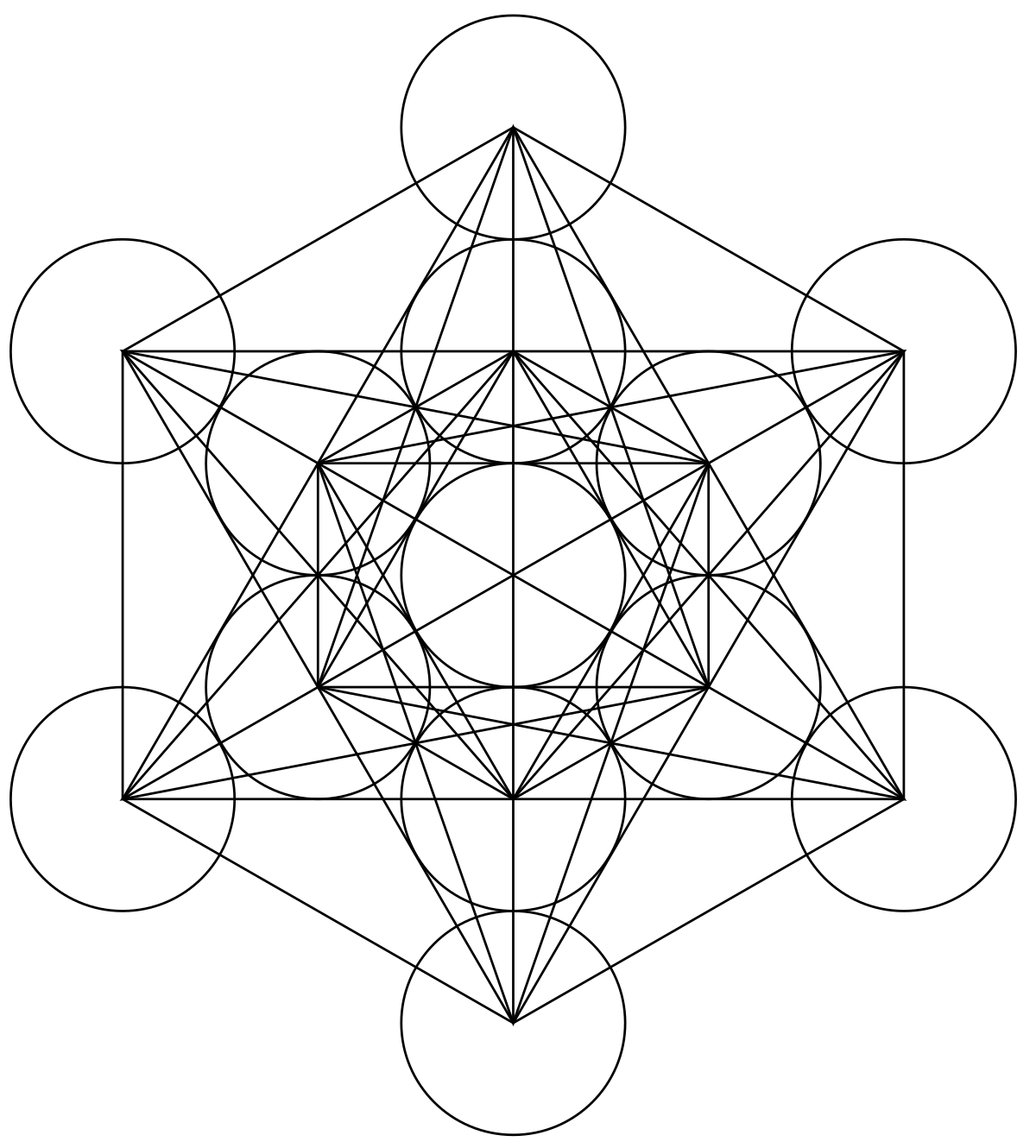
Sacred Geometry offers many contemplations, but the item known as Metatron’s Cube is perhaps unique. It has a rich history in the occult, alchemy, and religion.
The figure coalesces an arrangement of 13 spheres, with one in the center, 6 around it, and another 6 around those, connected by diameters. This is a form of 6 + 6 + 1 = 13.
If we count each line that is drawn from one center to another, counting only the number of starting points and ending points, but not counting the same line twice, we end up with this equation:
(13 × 12) ÷ 2 = 78
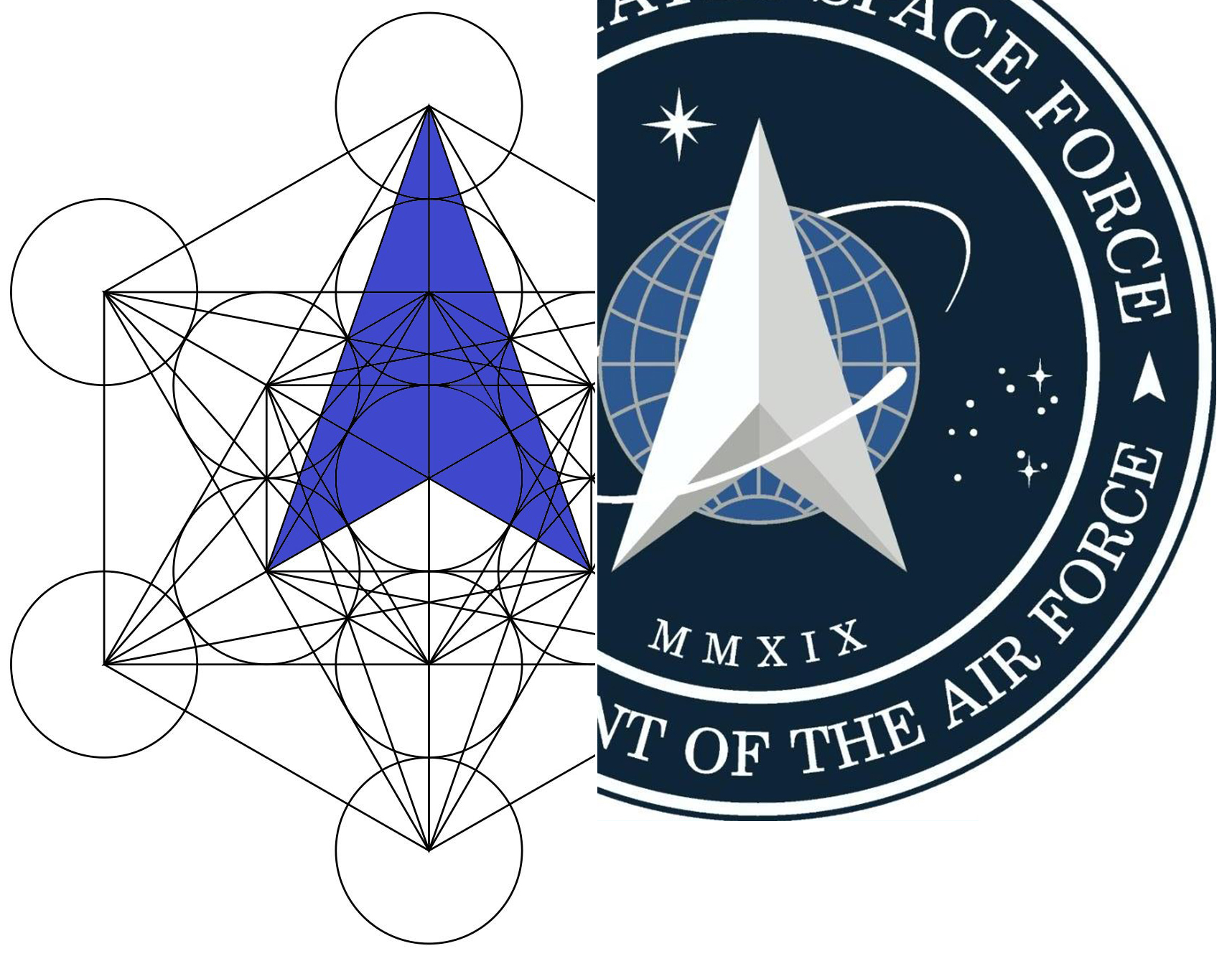
Within these lines can be seen may shapes, from basic triangles and squares, and then hexagons, but within lies many chevrons, and one in particular has made it to our USA military, specifically now the new branch called “Space Force.”
On a side note here, another sacred number with a 12 and a 13 is 313, but it is with this formula:
12² × 13² = 313
313 is a prime number, and can be written as:
(52 × 6) +1 = 313
Or:
78 + 78 + 78 + 78 + 1 = 313
313 is the number assigned to an asteroid named “Chaldaea.” It was discovered by Johann Palisa in 1891. Chaldeans were historically known to be the Babylonians who contributed many advances to the study of astronomy and astrology in and around the Axial Age, and who were eventually subsumed into Babylonian culture. They are considered the people whose extensive and methodical calculations nailed down the Saros and the Metonic cycles, which, along with other discoveries, allowed for the development of both the 12-sign zodiac and eventually personal astrology.
Without the efforts of the late Babylonian period astronomers, Western astrology as we know it today might not exist. So much of the corpus of Hellenistic period astrology, and the work of Ptolemy, was an outgrowth of the Chaldean school that Renaissance re-discovery of the Greek texts via the Arab world, that what has evolved into our contemporary school would look quite different, and might not even exist at all.
In religion, the mysticism of 12 and 13 are prevalent, as in the 12 disciples of Jesus, for a total of 13 people. In Islam, the lore tells us that 313 warriors battled on the side of Islam in the Battle of Badr in 624 AD, and on the Roman calendar date of March 13, or 3/13! And, in the Iranian Shi’ite sect, the a prophecy exists that the reappearance of the Imam al-Mahdi will be complete when he has 313 assembled companions.
In astronomy, the planet Uranus was discovered on March 13 of 1781, and the discovery of Pluto in 1930 was announced on March 13 – both 3/13 dates.
Of course, in the European style, “313” is March 31, or 31/3, and that kernel of calendar-ology has a tangential part to play in the Mars exaltation stuff I’m finally able to publish in other parts of this blog.
Some Final Numerological Notes
A 78-card deck also implies an invisible “22”, as 100 – 22 = 78. In other words, there is a set of shadow, or extra-dimensional, major arcana needed to reach the perfection state of the number 100.

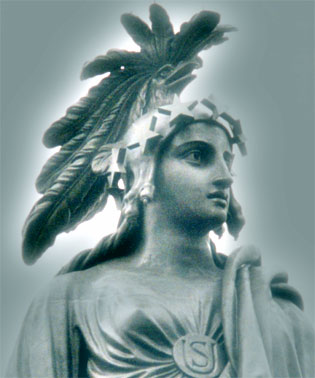
There is a 39 (78 ÷ 2) encoded in the street grid of Washington DC, which is half of 78. The main streets that radiate out westward from the Capitol building are at a 39° angle. This angle is further divided by two, yielding 19.5°, and as if to reiterate the importance of that angle, the statue atop the Capitol dome – the Statue of Freedom – is exactly 19 feet and 6 inches tall.
Next for the tarot in Part III of this two-part series: constellational iconography in the major arcana. You’d be a fool to miss it!
-Ed
 Emersion: A Blog from Occursion Media on Somewhat Interesting Hidden and Cryptic Astrological Histories
One thought on “Astrological Elements of the Tarot (no, not what you’ve read before) – Part II”