
In the first two foundational parts of this series, I made the case for astro-numerological constructs in the tarot. In this part, we’re going to look at some ancient astrological iconography that landed in the tarot, how this relates to all the tedious math we did in Part II, and the reasoning behind the constellational/zodiacal symbolism in the deck.
To understand how certain astrological motifs became interlaced in the tarot, we need to first identify the origins of various figures in the major arcana.
The first four cards, from the Magician through the Hierophant, are not astrological motifs. The remainder do have either astrological or cosmological motifs.
Aquarius
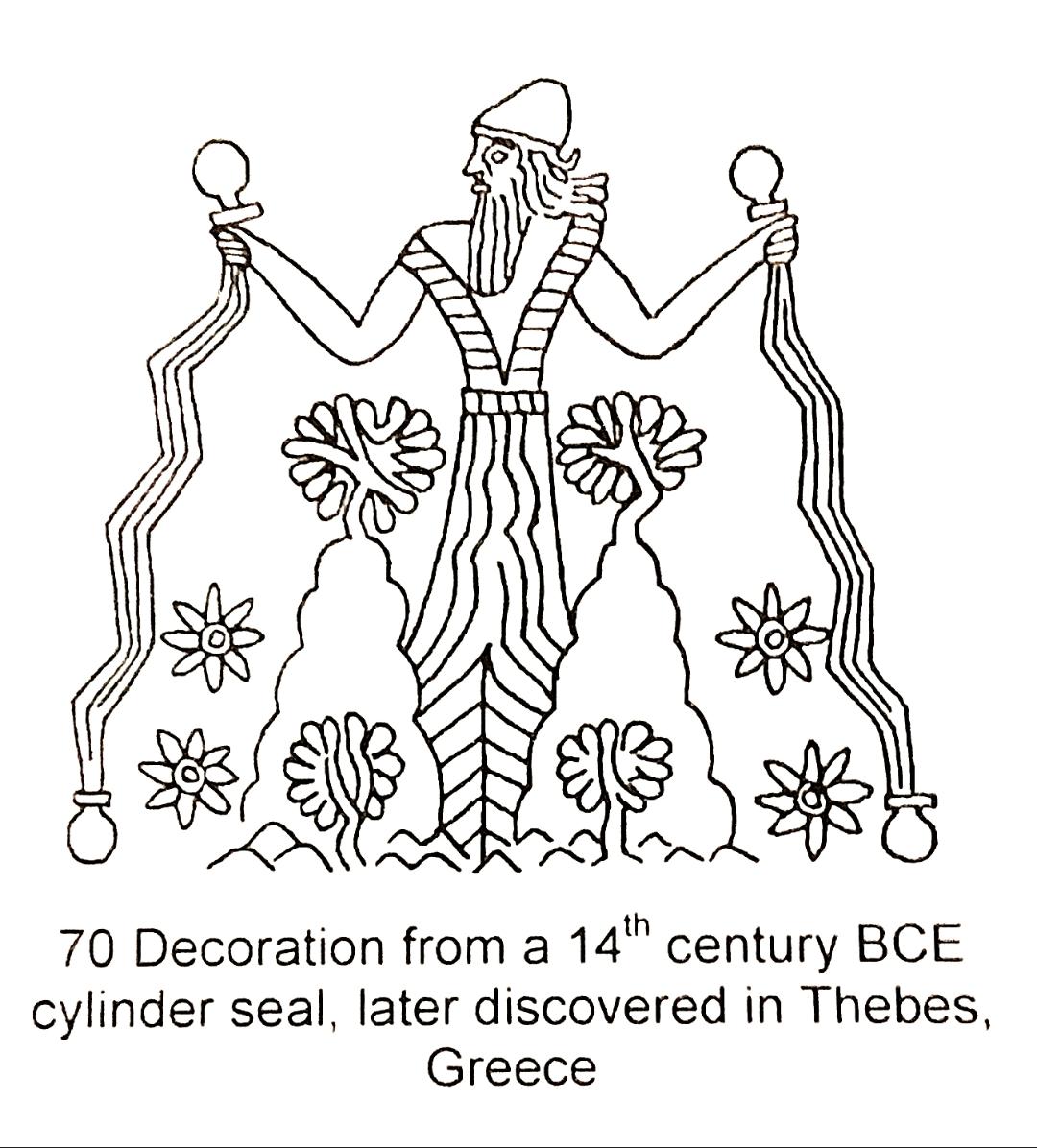
Two of the major arcana feature a water-bearing figure: Temperance XIV and The Star XVII. Both feminine, which should tell us that the idea of water being life-bearing was important. In constellational iconography, the obvious example is Aquarius, though it was always a male figure doing the dispensing.
Regardless of what modern pseudo-mystic astrologers tell us about Aquarius (and they are working overtime now that Pluto has ingressed into the sunsign), the impetus for the heavenly figure simply had to do with that area of the heavens being transited by the Sun during the rainy season in ancient Mesopotamia. The water-bearing figures were taken from Gavin White’s Babylonian Star Lore, and all pre-date the tarot by two millennia.
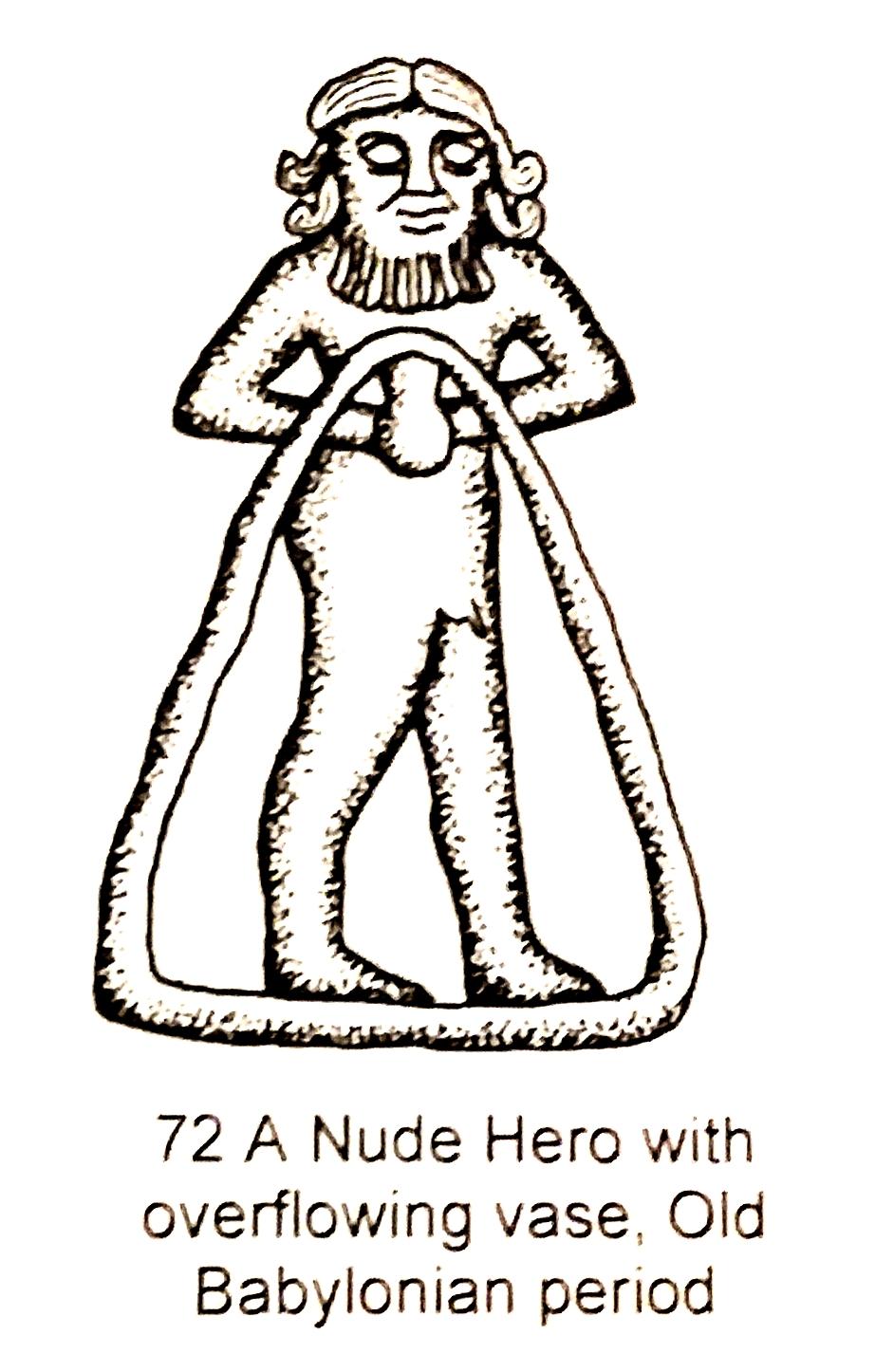
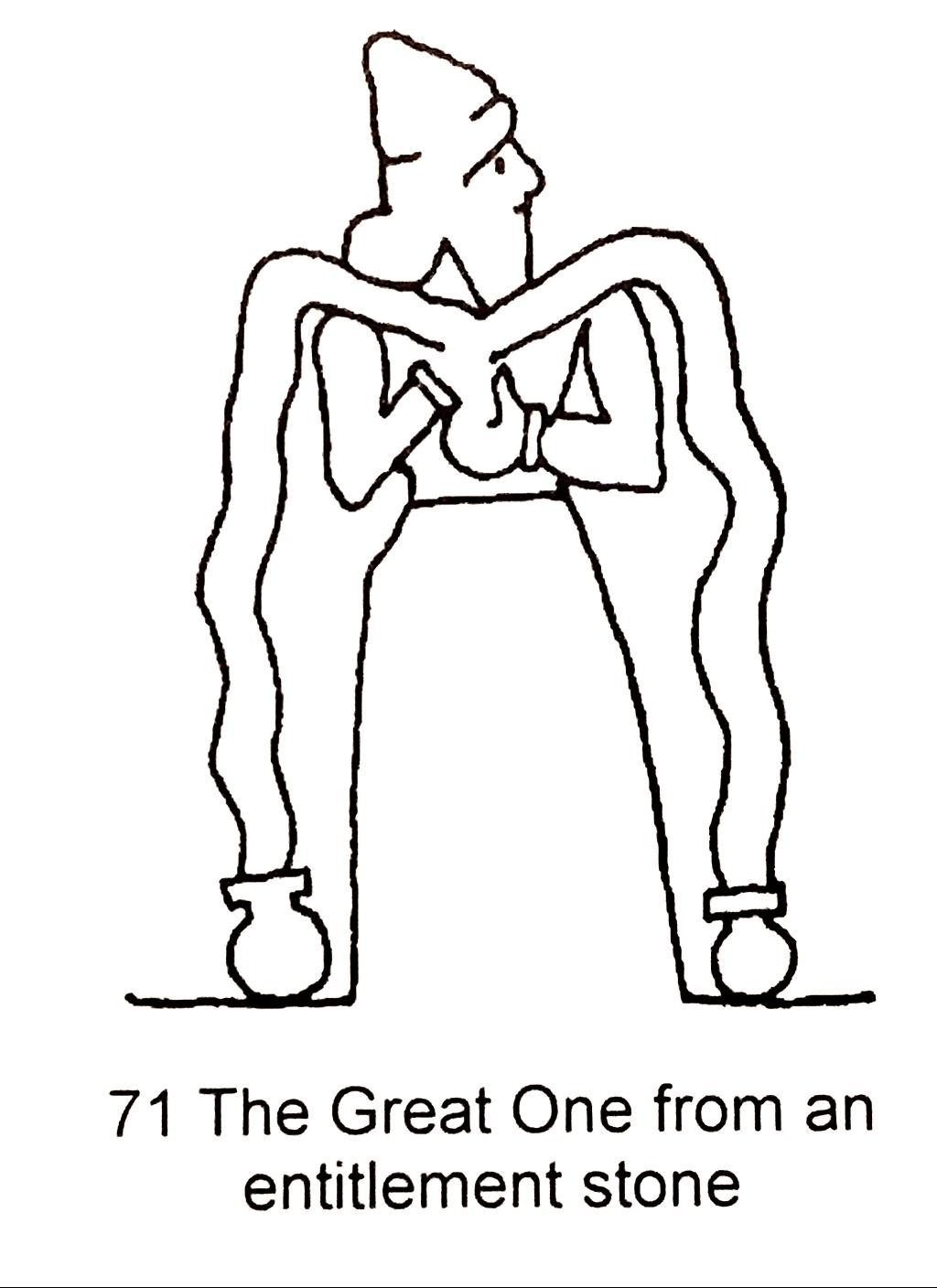
Capricorn, the “Sea-Goat,” and Pisces, which is now two fish but once was a fish and a swallow, are also of a watery theme, and thus that entire quadrant of the sky was related to the rainy season. There’s really nothing mystical about this – even the ancients knew that water was necessary for their food production, and needed to personify the area of the heavens they thought was responsible.
Common features of these water-bearing fellows are the urns and the streams, and we find that for the most part on Temperance cards through the centuries. An evolution of the early motif is that the woman becomes an angel, but this makes sense if we think of the fixed stars as the host of angels in the Judeo-Christian milieu. The Visconti card does not have angelic features, but the dress the woman is wearing is decorated with stars against a deep blue backdrop, suggesting that she is indeed from the heavens.
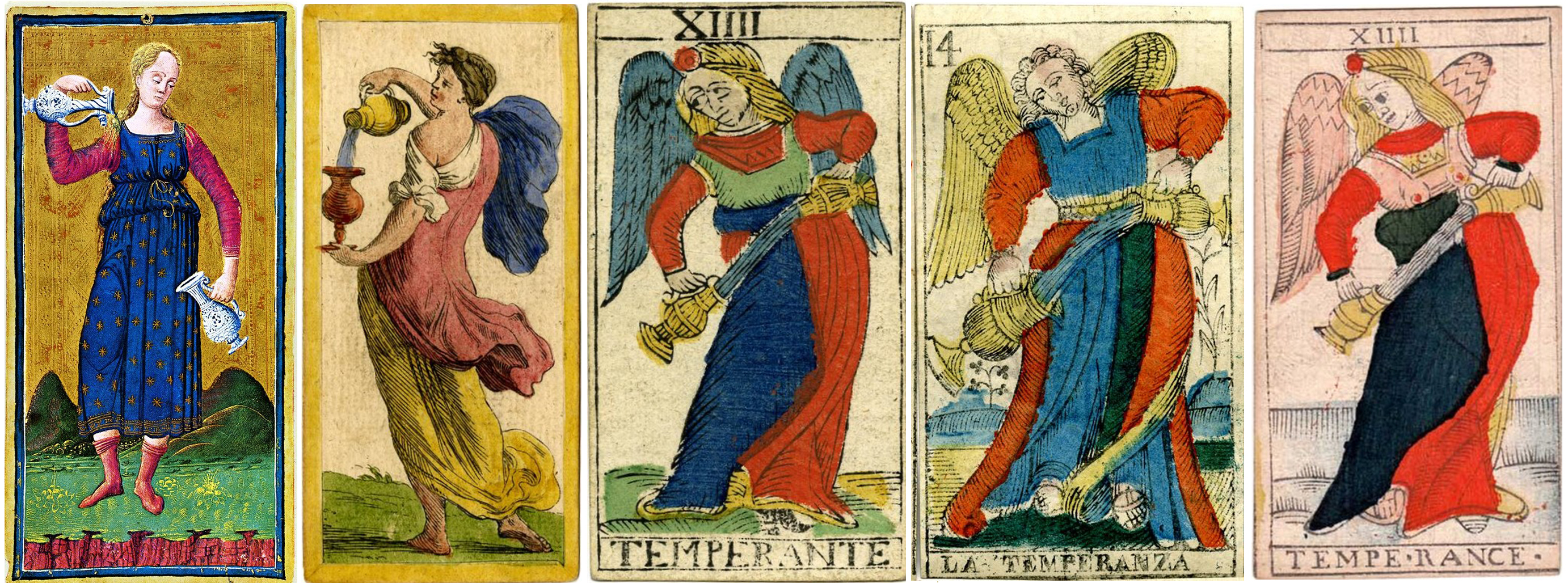
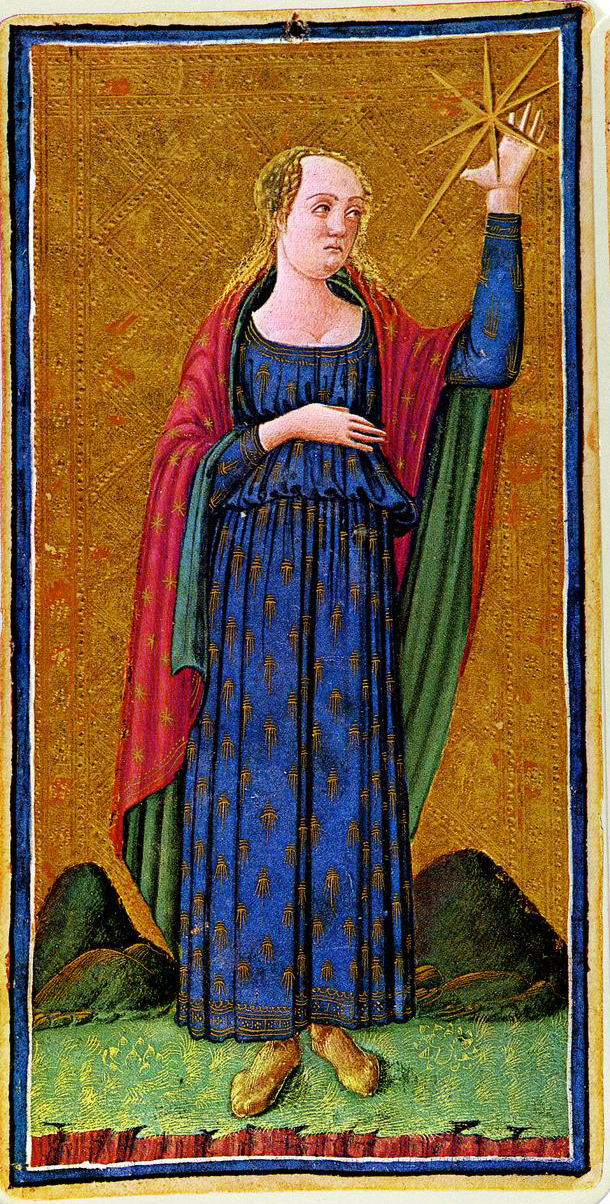
The stars in the red shawl of the Visconti Star card, with the glyphs in the her blue dress, give us an obvious connection of Venus to flowing water. Water is the primary psychic medium, and psyche is a feminine realm. In Temperance, the figure is not pouring water on the ground, but instead pouring from one vessel to another. It’s position as #14 in the series implies a station in the circle, being a multiple of seven, and between the Chariot VII and the World XXI:
- 0 + 7 = 7
- 7 + 7 = 14
- 14 + 7 = 21
As noted in Part I, Venus is exalted “in” Pisces, but it also “rules” over the zodiac signs of Taurus and Libra. Also noted was the ancient pre-Zodiac designation of the Pleiades as its own constellation; after the Chaldean era and the standardization of a 12-signed zodiac, the Pleiades was subsumed into the realm of Taurus.
The Pleiades, being a cloudy nebula, was associated with clouds that bring rain; it and Aquarius became the two main rainy-weather associations in the heavens. The “V” shape in the constellational figure of Taurus is also a very faint nebula called the “Hyades,” and that area has also been noted as being associated with rain, giving Taurus a connection to spring precipitation.
The brightest star in Taurus – Aldebaran – is also in the “V” of the Hyades. The importance of Aldebaran in ancient astrology cannot be understated; it has been discussed elsewhere in this blog.
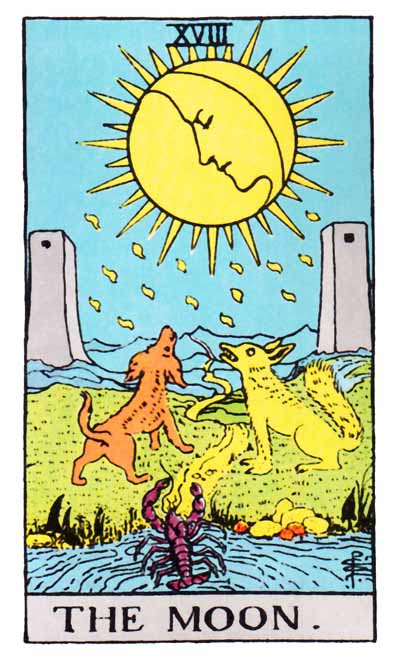
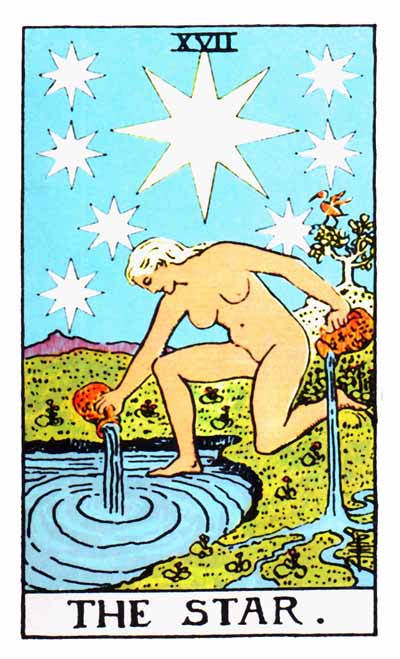
Taurus is a Venus-ruled sign, and the Moon is “exalted” there, and we have these two watery themes among the astrology cards.
A fair amount of early constellational figures were based on the seasonal timing of things that would take place in the natural world around them, and Aquarius remains a chief example. However, Aquarius does not have a connection to Venus or the Moon.
The Tower
The card that precedes the stellar triumvirate is The Tower XVI. This card has obvious negative connotations, but it has a definite constellational correlation.
I have noticed a standard misidentification of the Lovers card with the zodiac sign of Gemini. I’m not sure where this common mistake originated, as Gemini, “The Twins,” has never had anything but two males as the twins, and as twins, are brothers. If the Lovers card is about Gemini, then it would laughably be about homosexual incest marriage, which is preposterous.
The Tower card is actually associated with Gemini. The two males in the motif that are falling from the “House of God” are symbolic of Castor and Pollux. the fellow on the left who is going head-first into the ground has a leg bent in such a way that is specific to the constellational outline of Gemini. The design in the Waite tweaks the design somewhat, and then makes the scene one of the nighttime, which does violate the early renditions that had a daytime sun in the upper right.
But is this enough to be sure that the Tower is Gemini?
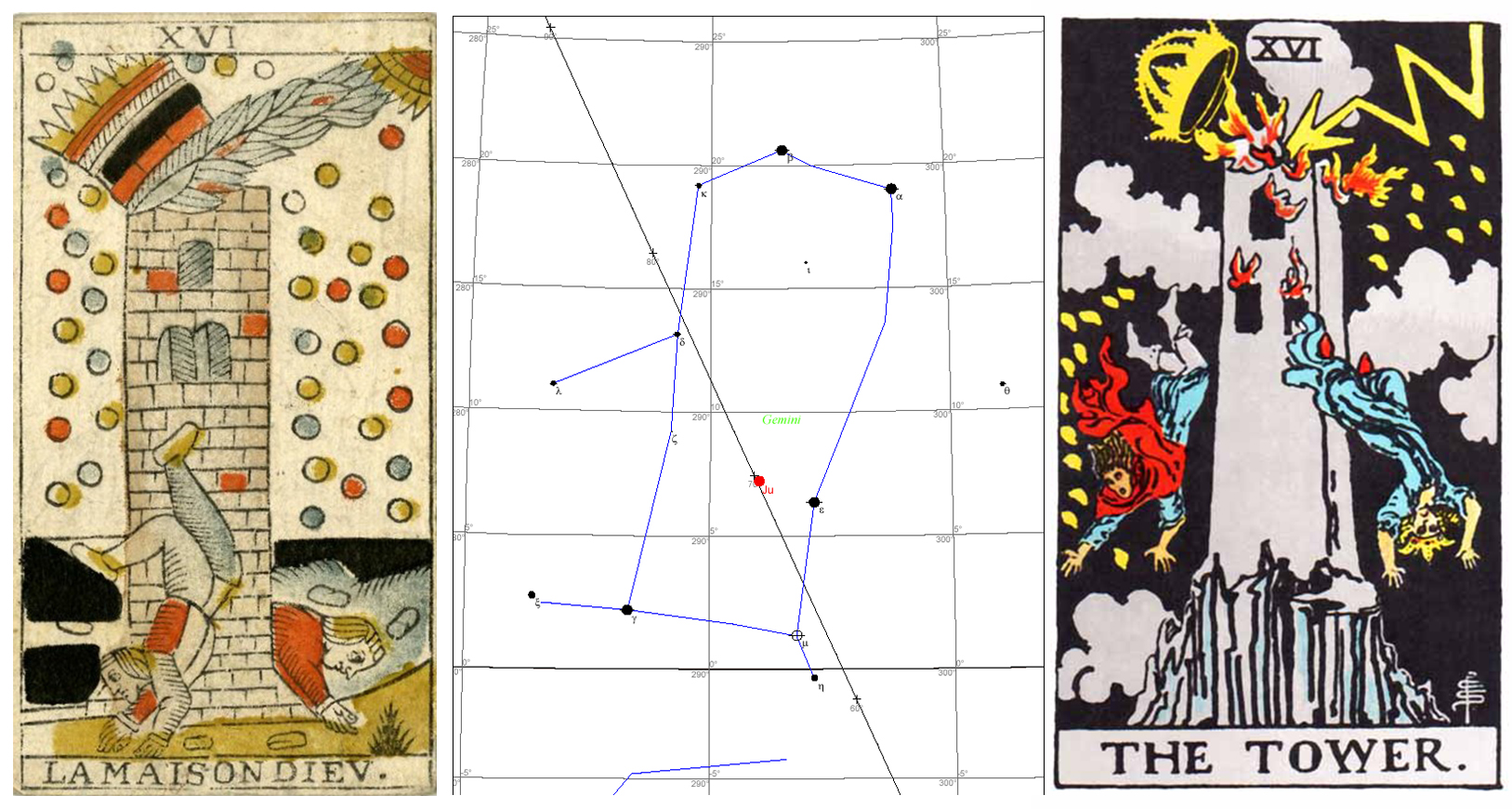
No doubt that the scene evokes, on some level, the biblical story of the Tower of Babel in Genesis 11, which was a bit of a slam against Babylon and the Hebrew captivity. Towers, called ziggurats, were built in ancient Persia and Babylon, and used primarily as worship centers to the astral gods, part of which was the recording astronomical phenomena.
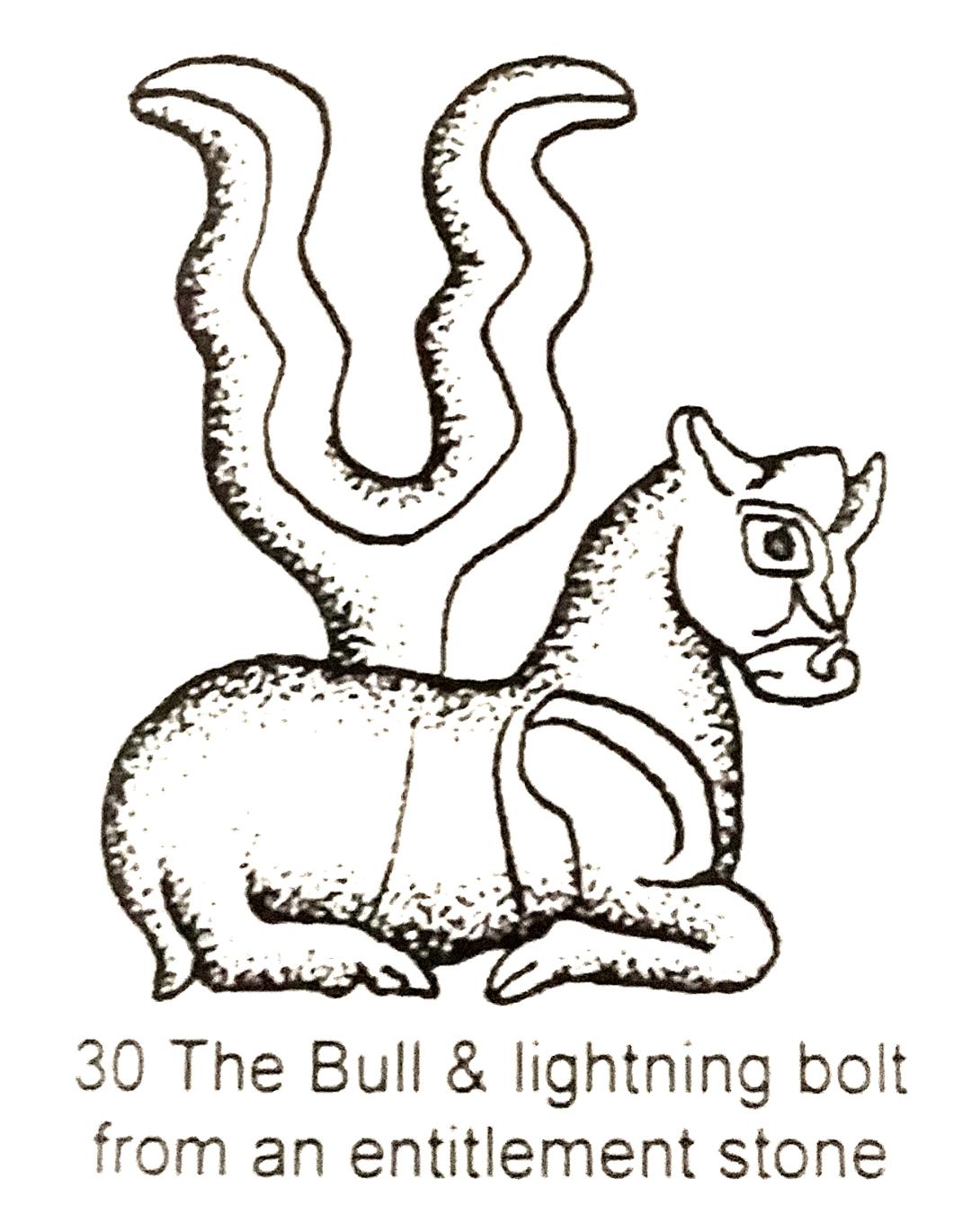
Of course, there is not any mention of heavenly lightning coming down and destroying the edifice in the bible story, although the god of the bible did seem to have some serious problems with Babel. Whence comes the bolt, then?
The constellation of Taurus the Bull is the the right of Gemini, a truly ancient association in constellational iconography. The bull-god of Ishkur is also of ancient origin, so it is easy to make the leap from Taurean lightning aiming at Geminic towers in the tarot.
Furthermore, it has been hypothesized that the twin stars in Gemini were associated with the testes in the ancient world, and thus the connection to a “tower” would complete the genital inference. There is no denying the phallic nature of the card’s design.
Thus, it now makes sense that the tower-astrological concept would precede, and be contiguous with, the planetary cards.
The Chariot
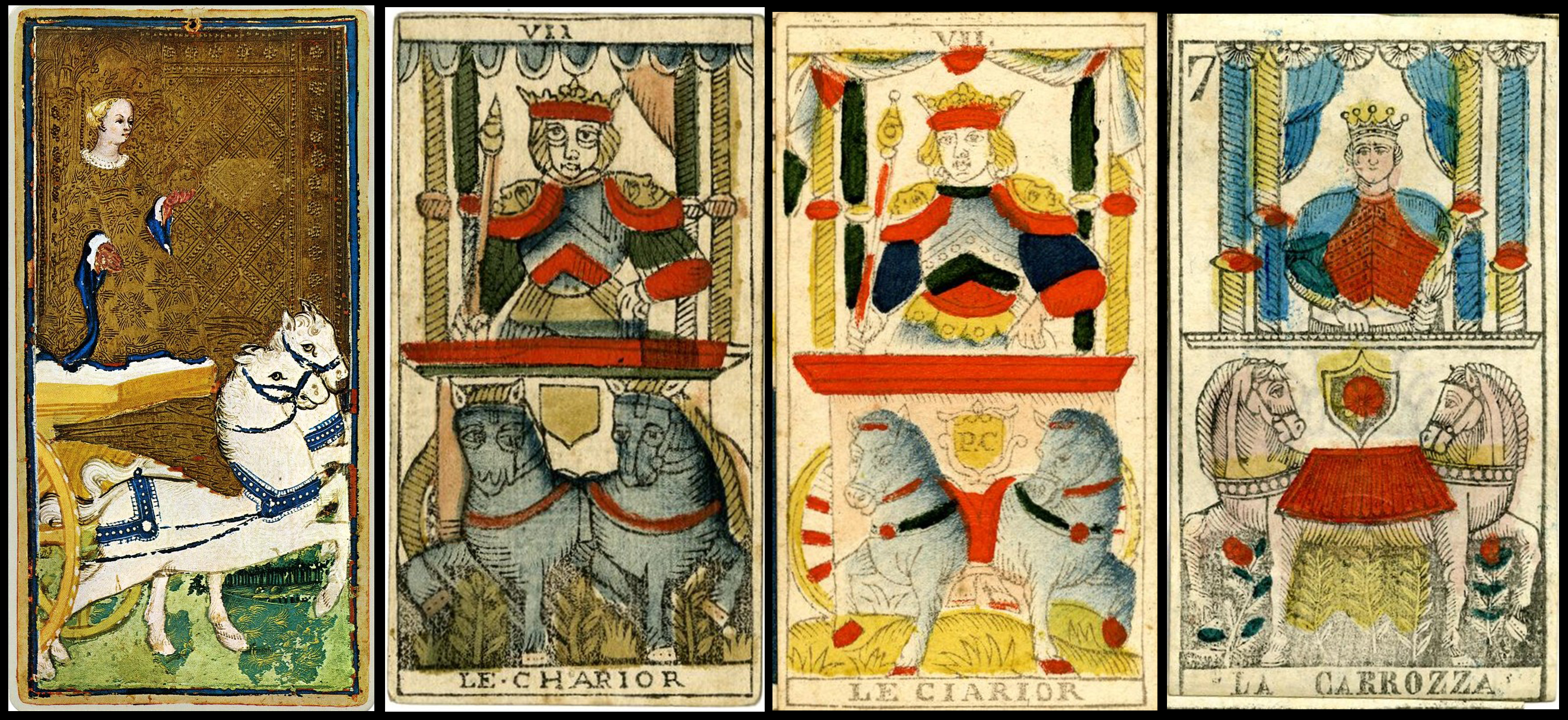
A chariot, or at least a charioteer, has been a constellational figure since Western antiquity. Called Auriga by the Romans, it consisted of four horses, and also a goat, though not to be confused with the ancient “Goat Star.” Huyginus’ rendition from the late 15th Century shows two horses, two oxen, and some goats on the left, which was to the left of the charioteer, but to the right from our perspective.
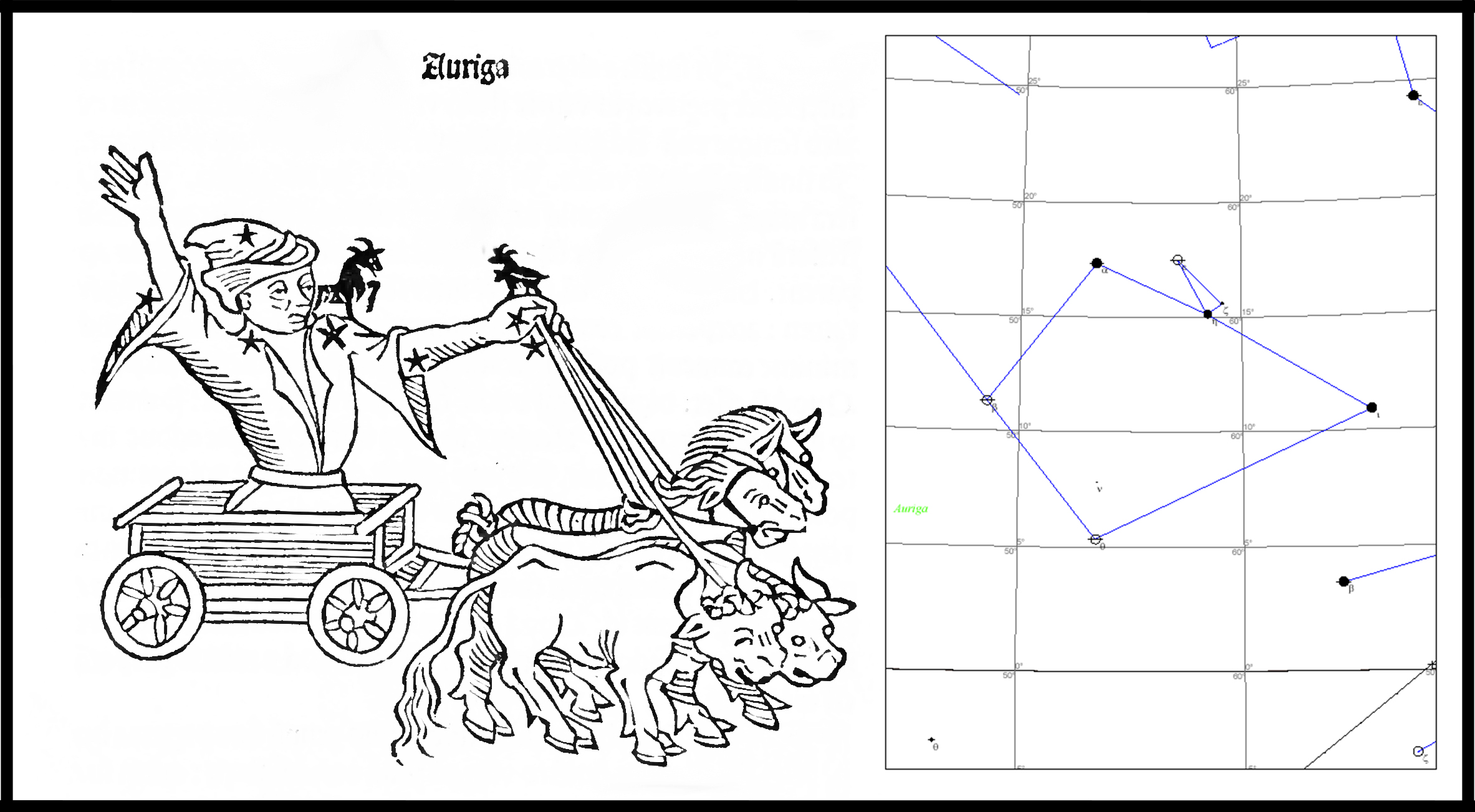
Auriga has a “kite” shape, as seen in the graphic below, and the little triangle shape is the goat. The Chariot card seems to represent two things, either a sign of wealth and royalty, or a sign of battle, or both, as chariots were definitely a technological advancement in warfare. Perhaps the royal figure in the tart is a triumphant prince, having just won a skirmish or war. That the chariot has only two horses, the idea of a victorious noble figure is almost certain.
Chariots also had celestial connotations, as the imaginary vehicles that moved the seven planets through the heavens, and here is where we again find an astrological allusion. The “7” is the number of classical planets, and also the number of stars in both Orion and the Big Dipper, Ursa Major. In fact, the ancient Sumerians saw both the Big Dipper and the Little Dipper, Ursa Minor, as battle wagons. Those iconographs actually show up in Homer’s Odyssey, who refers to a wagon as an alternative title for the “Great Bear”; Aratus also tells us that both celestial bears could also be envisioned as wagons.
An allusion to Auriga as the “Four Horsemen of the Apocalypse” in the famous biblical book was made by my mentor Rab Wilkie, but he never expounded on that enough for me to explain it here.
The Fool
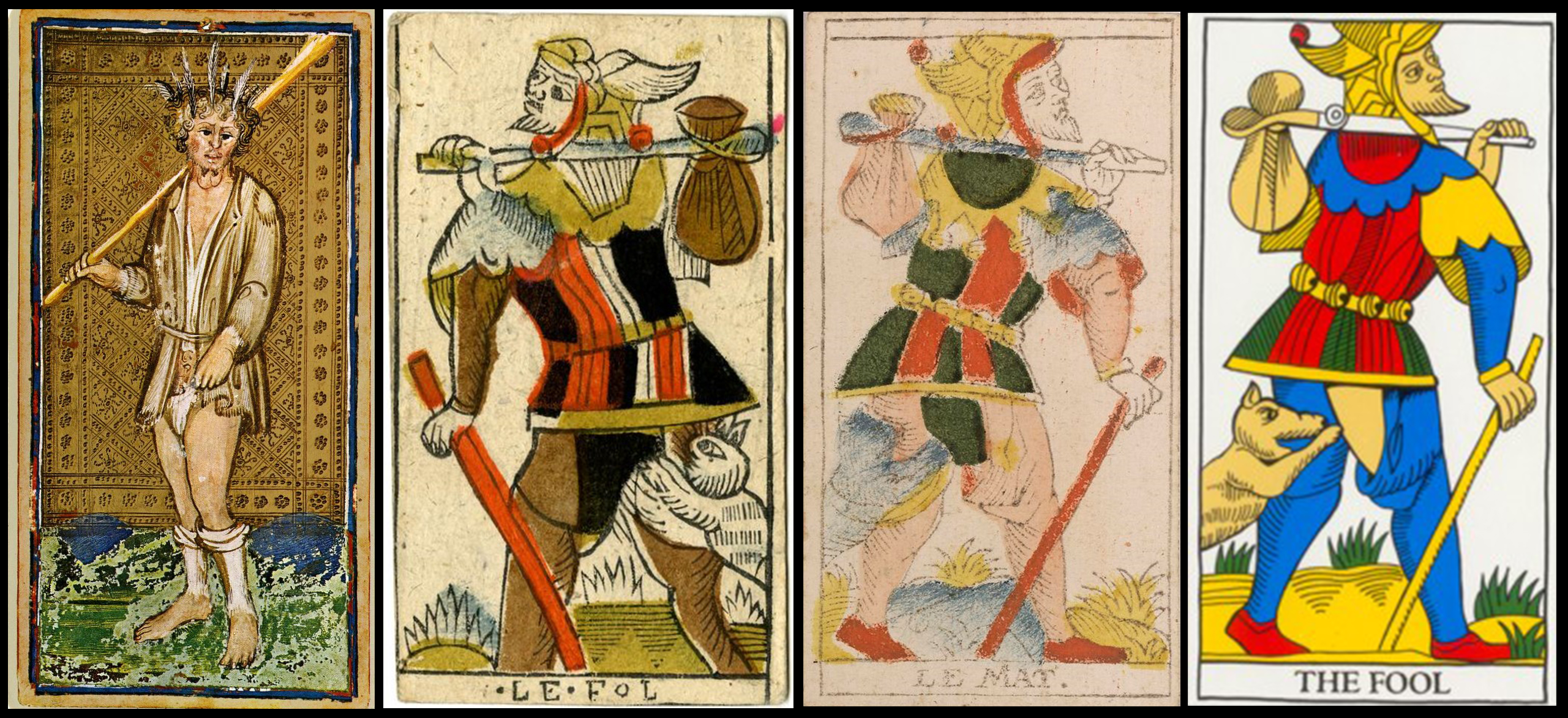
The motif of the Fool card has remained mostly standard through the centuries. It’s basically a kind of apathetic figure with a staff. A dog is following the figure, who is in motion. He has scant possessions, but is nonetheless blissful. Consider the etymology of the word, according the very good Etymology Online website:
early 13c., “silly, stupid, or ignorant person,” from Old French fol “madman, insane person; idiot; rogue; jester,” also “blacksmith’s bellows,” also an adjective meaning “mad, insane” (12c., Modern French fou), from Medieval Latin follus (adj.) “foolish,” from Latin follis “bellows, leather bag,” from PIE root *bhel- (2) “to blow, swell.”
The sense evolution probably is from Vulgar Latin use of follis in a sense of “windbag, empty-headed person.” Compare also Sanskrit vatula- “insane,” literally “windy, inflated with wind.” But some sources suggest evolution from Latin folles “puffed cheeks” (of a buffoon), a secondary sense from plural of follis. One makes the “idiot” sense original, the other the “jester” sense.
The word has in mod.Eng. a much stronger sense than it had at an earlier period; it has now an implication of insulting contempt which does not in the same degree belong to any of its synonyms, or to the derivative foolish. [OED]
Also used in Middle English for “sinner, rascal, impious person” (late 13c.). Meaning “jester, court clown” in English is attested c. 1300, though it is not always possible to tell whether the reference is to a professional entertainer counterfeiting mental weakness or an amusing lunatic, and the notion of the fool sage whose sayings are ironically wise is also in English from c. 1300. The French word probably also got into English via its borrowing in the Scandinavian languages of the vikings (Old Norse fol, Old Danish fool, fol).
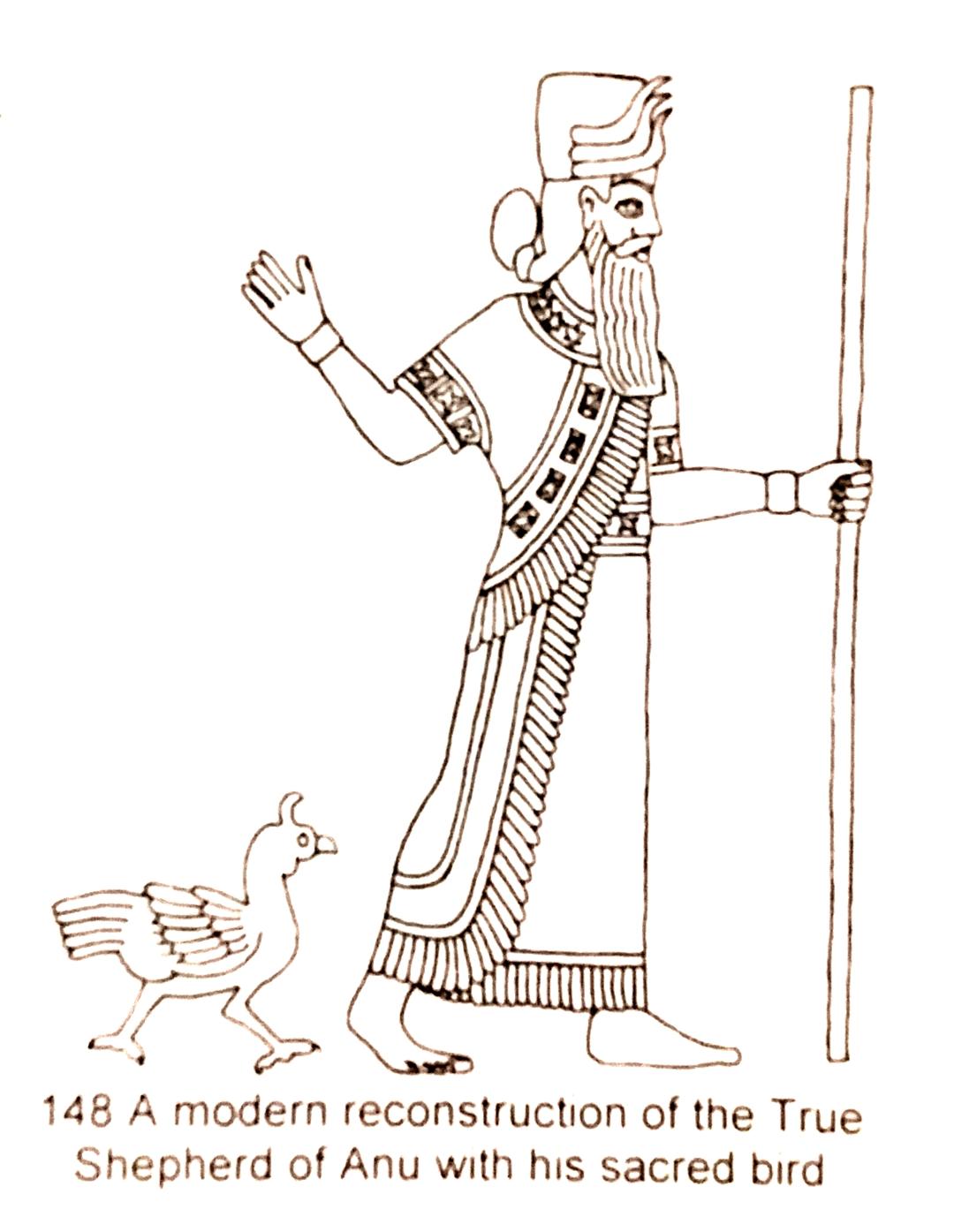
Yet, the one thing at the core of this card is its “zero-ness,” and its station as a wild card. In terms of the major arcana, it is either the 22nd card or the zeroth. When we recall that the formula for the circle is 22/7, the Fool card is the fiducial. And this reveals it’s constellational foundation: Orion, but not so much the Greek character who was out hunting, but the Sumerian character who was called “The True Shepherd of Anu.”
“The True Shepherd of Anu represents the herald of the gods. He travels back and forth between the realms of heaven, earth, and the underworld relaying the messages of the gods to the denizens of every world, and in turn he delivers the prayers and the supplications of the people back to the gods.” White, Babylonian Star Lore.
Here we have a figure who does what the Fool card does – become other cards, messaging other cards. He is more than just a jester, though. He instead serves as a balancing act for all other sky deities.
The chicken that is following the True Shepherd is a dog in the tarot, but that dog is obviously the Dog Star, Sirius, of Canis Major, which does “follow” Orion as it transits overhead. The belt stars of Orion, which are nearly in a straight line, “point” to Sirius.
Orion’s belt stars are actually very closely aligned with the equator of the sky, thus the “True Shepherd” moniker; the “way of Anu” was how the Sumerians described the part of the sky that rises directly east, again at the middle of the heavens.
A Constellational Grouping
It is no accident that the taro depicts four contiguous constellations: Orion, Gemini, Auriga, and Taurus/Pleiades:
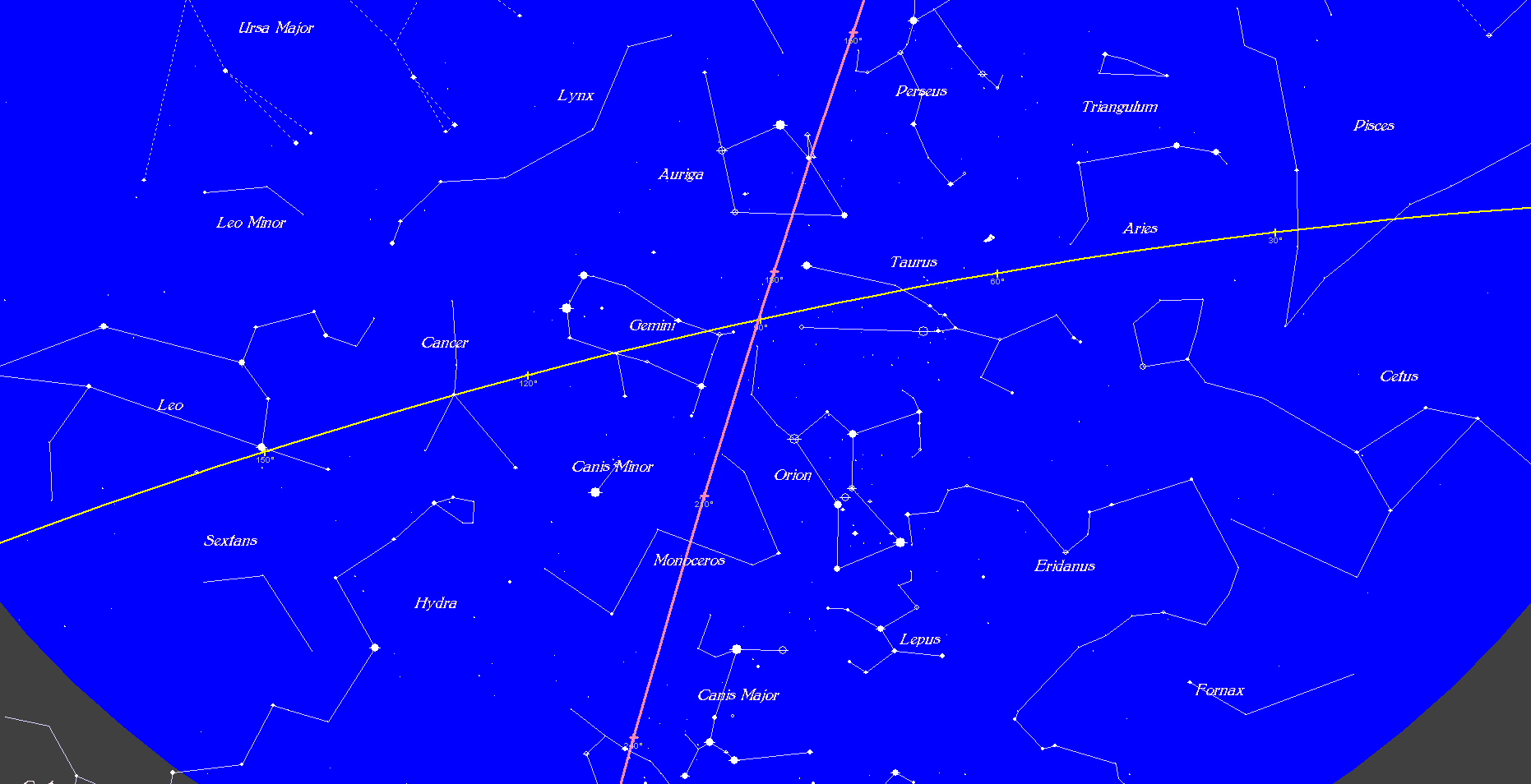
In the above graphic, the yellow line that extends from left to right is the ecliptic, and the mauve line that extends from top to bottom is the galactic plane. This region that is depicted in so many tarot trumps is the crossroads of the path of the sun, moon, and planets, with the Milky Way! This region of the sky has many very bright stars, and really pops when the viewing is clear. The best time of year to see this is the winter months.
Strength and Justice
It goes without saying here that Justice is connected with the sign of Libra, the Scales, and that Strength is connected to Leo, the Lion. Justice as a classical motif has always been a female, and the rulership of astrological Libra is Venus. (Yes, Venus makes many appearances in the tarot.) Strength depicts a masculine figure.
Libra in the heavens is the sign of the autumnal equinox, where the ecliptic meets the equator, evoking the design element of the balancing scales, as the equinoxes divide the seasonal year, and the northern and southern treks of the sun and planets. As the #11 card, it does represent the half-way point of the 22 cards, and thus is at the opposite end of the circle where Orion, the other “equator”:
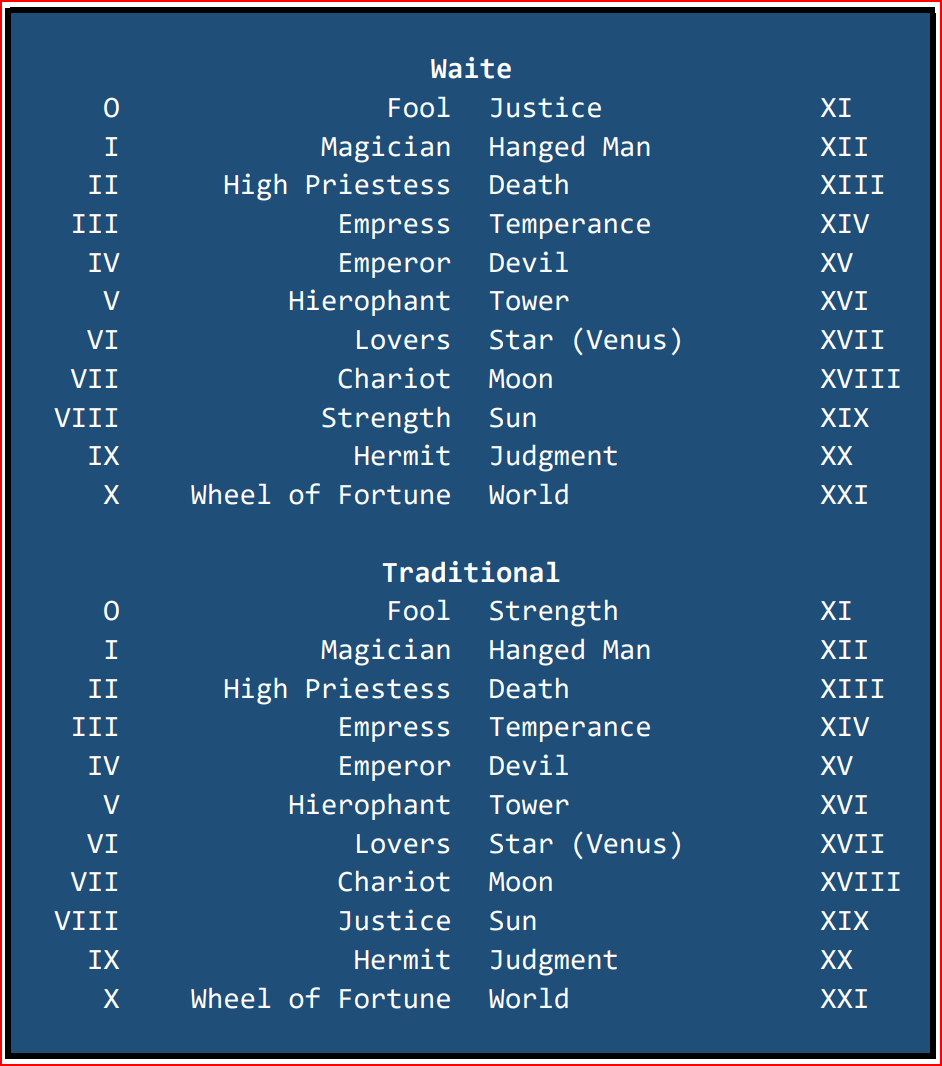
The ordering of Justice and Strength are traditionally cards #8 and #11, though their order was flipped in the Waite deck, probably for this reason:
- Fool-0 + 11 = Justice-11
- Justice-11 + 11 = 22
- Fool = 0 and 22
With Strength as card #11, that tidy symmetry falls apart, though one can envision how a diameter of a circle as being the strength of the shape.
The Wheel of Fortune and The World
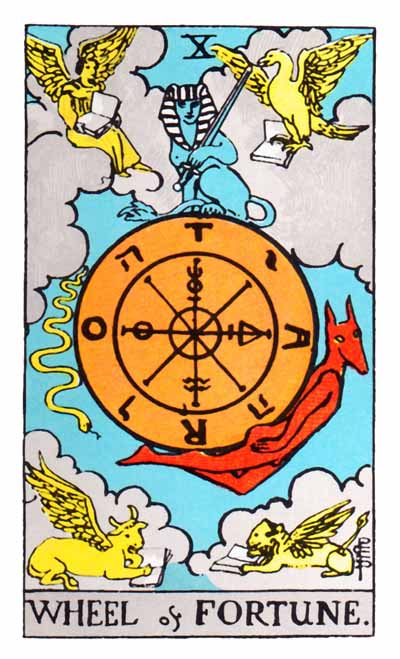
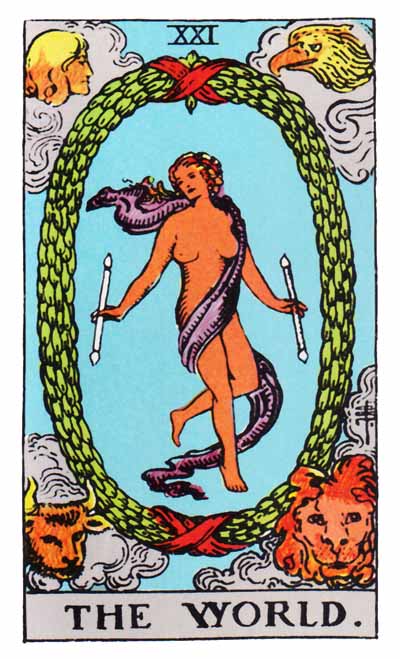
These two cards are similar, and the designs suggest as much, as both feature the cross-quarter zodiac signs of Taurus, Leo, Scorpio, and Aquarius. They are separated by 11 in the order of the cards, which is one more level of symbolism that conjures the relationship of the circle to its diameter.
On a final note, if we take the major arcana, and arrange them in a circle of 22, we might see that the cards on opposite sides of the circle have polarity, or counterpart, with all values separated by 11. In this matrix, the Strength card at #8 is juxtaposed to the Sun:
Before this part ends, FWIW, here is a math historian who explains how phi ϕ is a “more irrational number” than pi π. (Well, I’m geeky and find this interesting, ok?)
-Ed
 Emersion: A Blog from Occursion Media on Somewhat Interesting Hidden and Cryptic Astrological Histories
2 thoughts on “Astrological Elements of the Tarot (no, not what you’ve read before) – Part III”